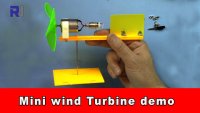
Educational mini wind turbine generates electricity when fan blows to it
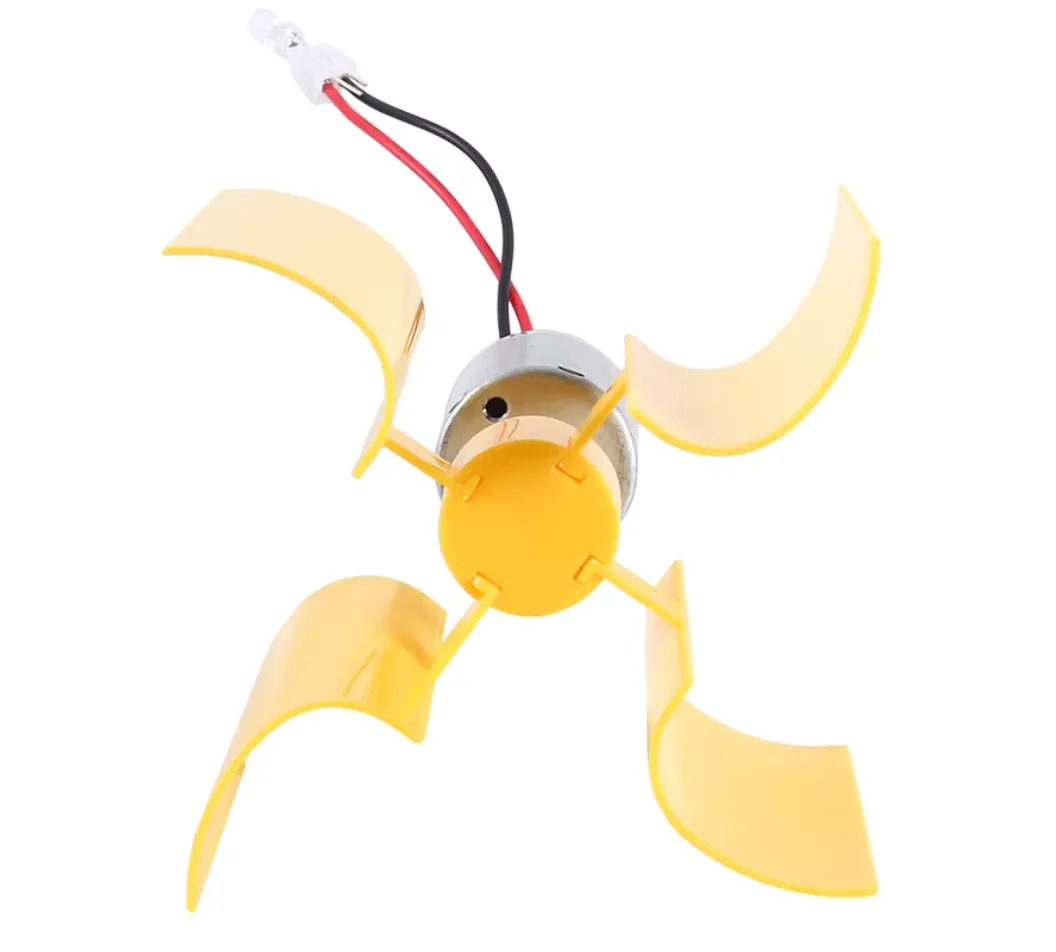
This guide walks through the assembly and demonstration of an educational mini wind turbine kit. Unlike practical wind turbines designed for power generation, this kit is a hands-on teaching tool that visually demonstrates the fundamental principles of electromagnetic induction. By using a simple fan to spin a magnet inside a coil of wire, you can see how mechanical energy is converted into electrical energy, powering a small bulb and generating a measurable voltage. It is an excellent project for classrooms, science fairs, or anyone curious about how generators work.
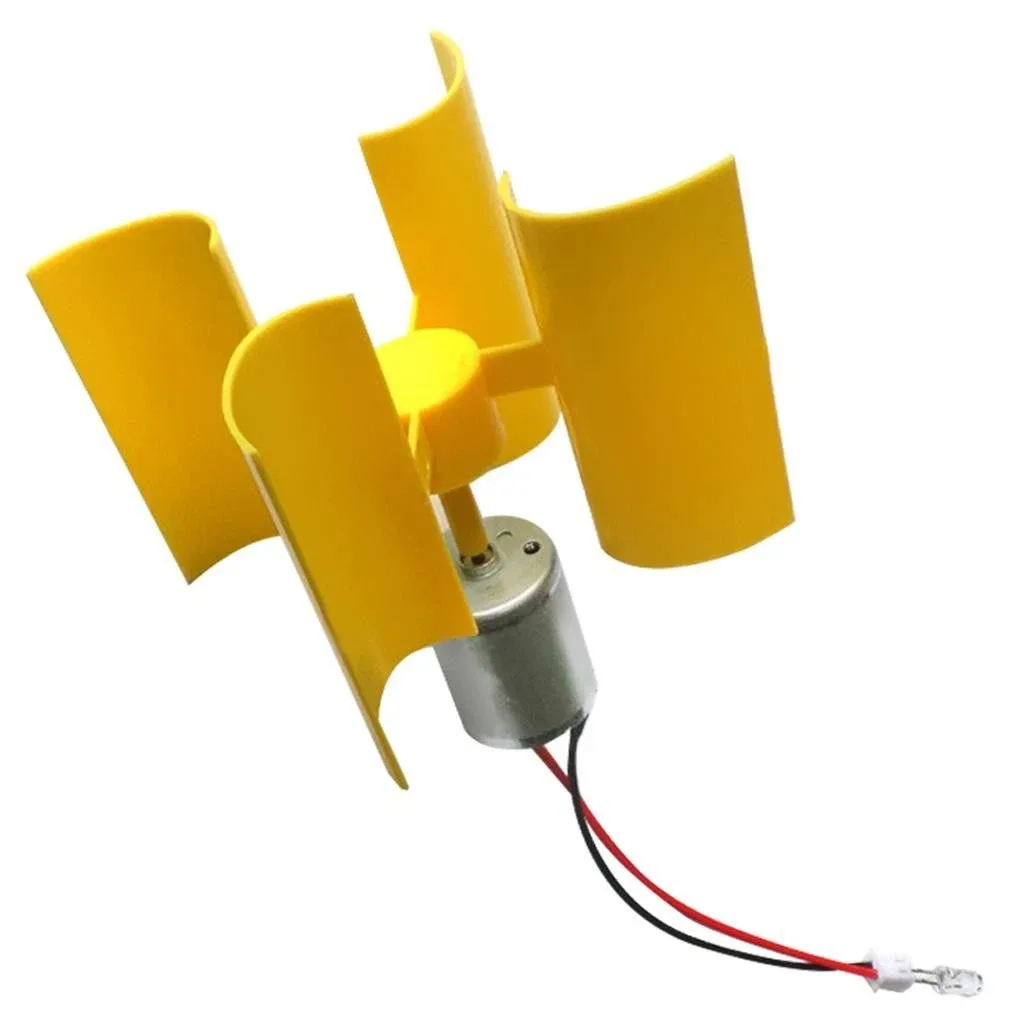
This project is not just about following assembly steps; it's about understanding the core physics of electricity generation. Here are a few ways you can use this educational turbine to explore and demonstrate these concepts:
- Classroom Demonstration: Visually explain electromagnetic induction to students, showing how a moving magnetic field creates an electric current in a wire.
- Science Fair Project: Use the turbine to test hypotheses about how fan speed or distance affects the output voltage, creating a compelling and interactive display.
- Interactive Learning: For hobbyists and tinkerers, it's a great way to build a foundational understanding of how generators in power plants, wind turbines, and even bicycle dynamos operate on a small scale.
- Voltage Measurement Exercise: Practice using a multimeter to measure AC voltage output under different load conditions (with and without the bulb).
-
wind-turbine-kit2-5
How the Generator Works
The core principle behind this turbine is electromagnetic induction. As explained in the video (in video at 00:47), the system consists of a rotating magnet at the center and two stationary coils of wire (windings) around it. When the fan blows, it spins the turbine blades, which are connected to the magnet. As the magnet rotates, its magnetic field continuously cuts across the wires of the coil. This constant change in the magnetic field forces the electrons in the wire to move, creating an electrical current. The video notes that a momentary change only creates a brief pulse, which is why the magnet must spin continuously to maintain a steady flow of electricity (in video at 01:29).
Hardware Components
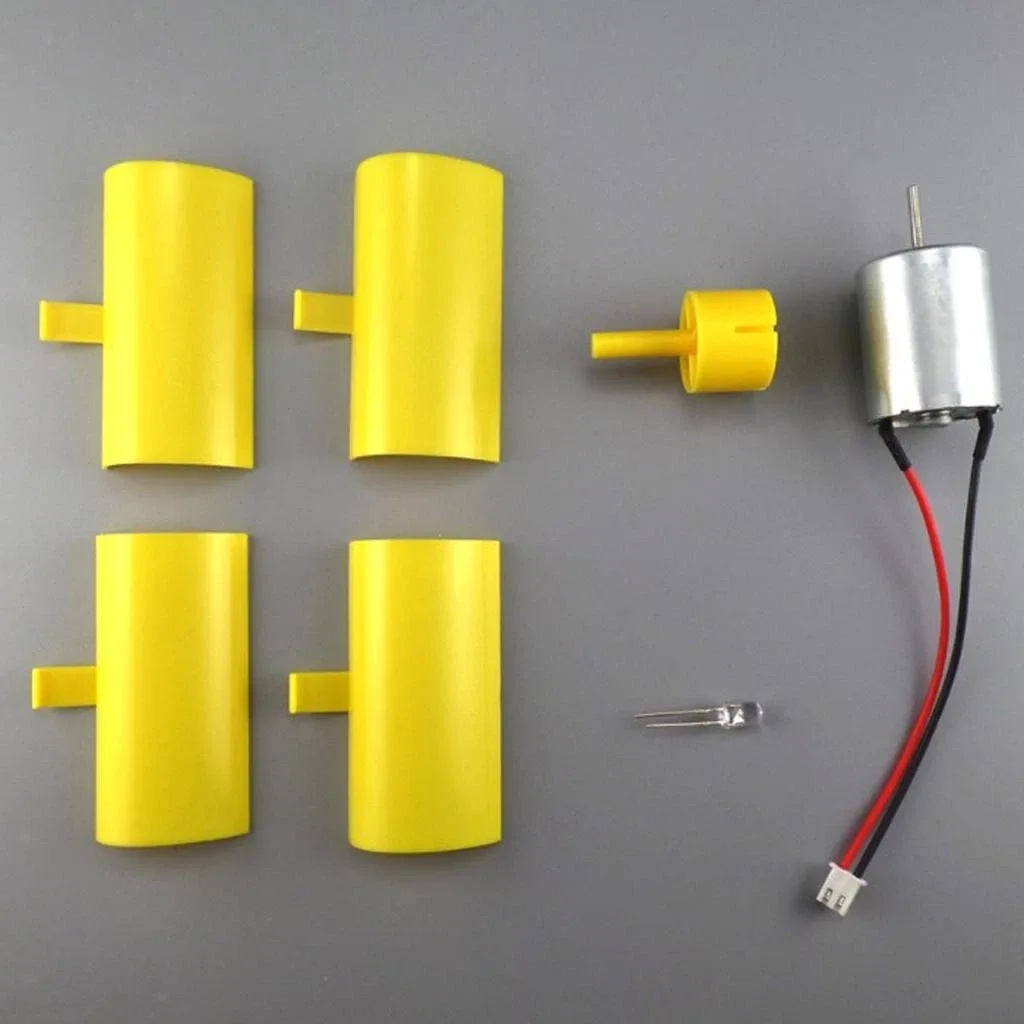
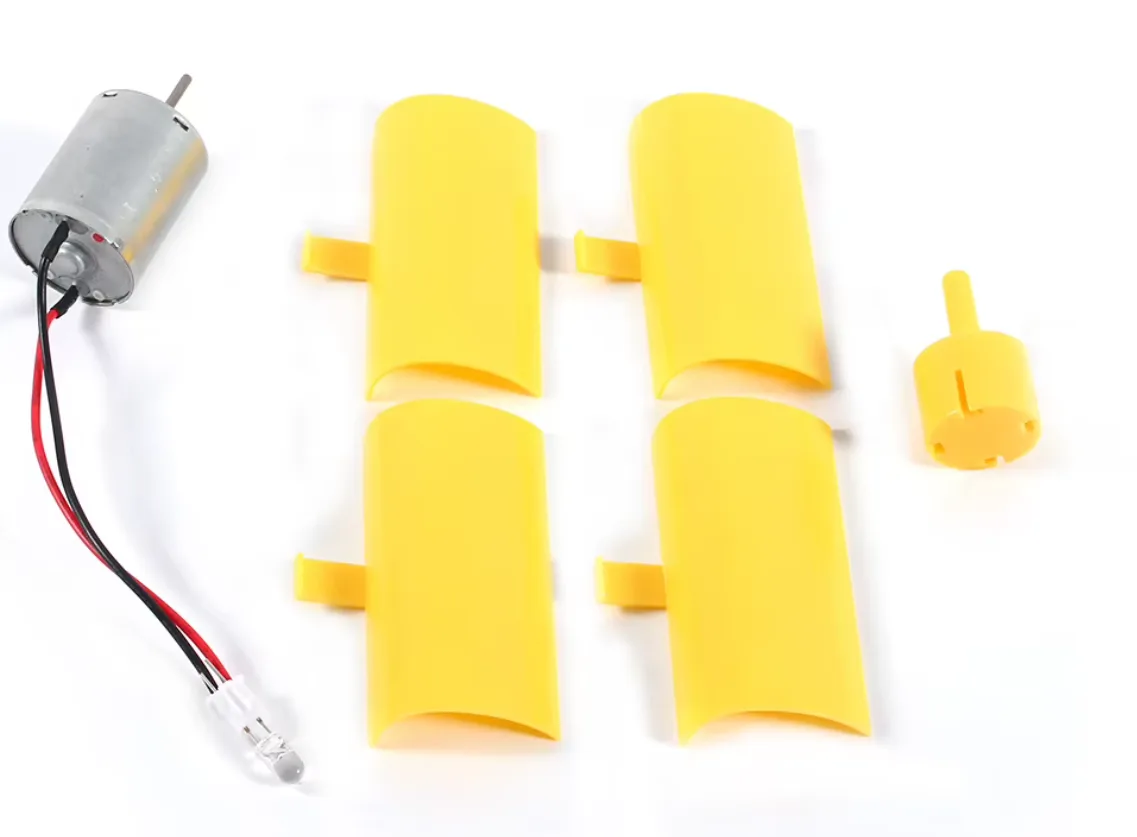
This project is based on a specific kit, and the unboxing shows all the necessary parts are included (in video at 01:51). You will need:
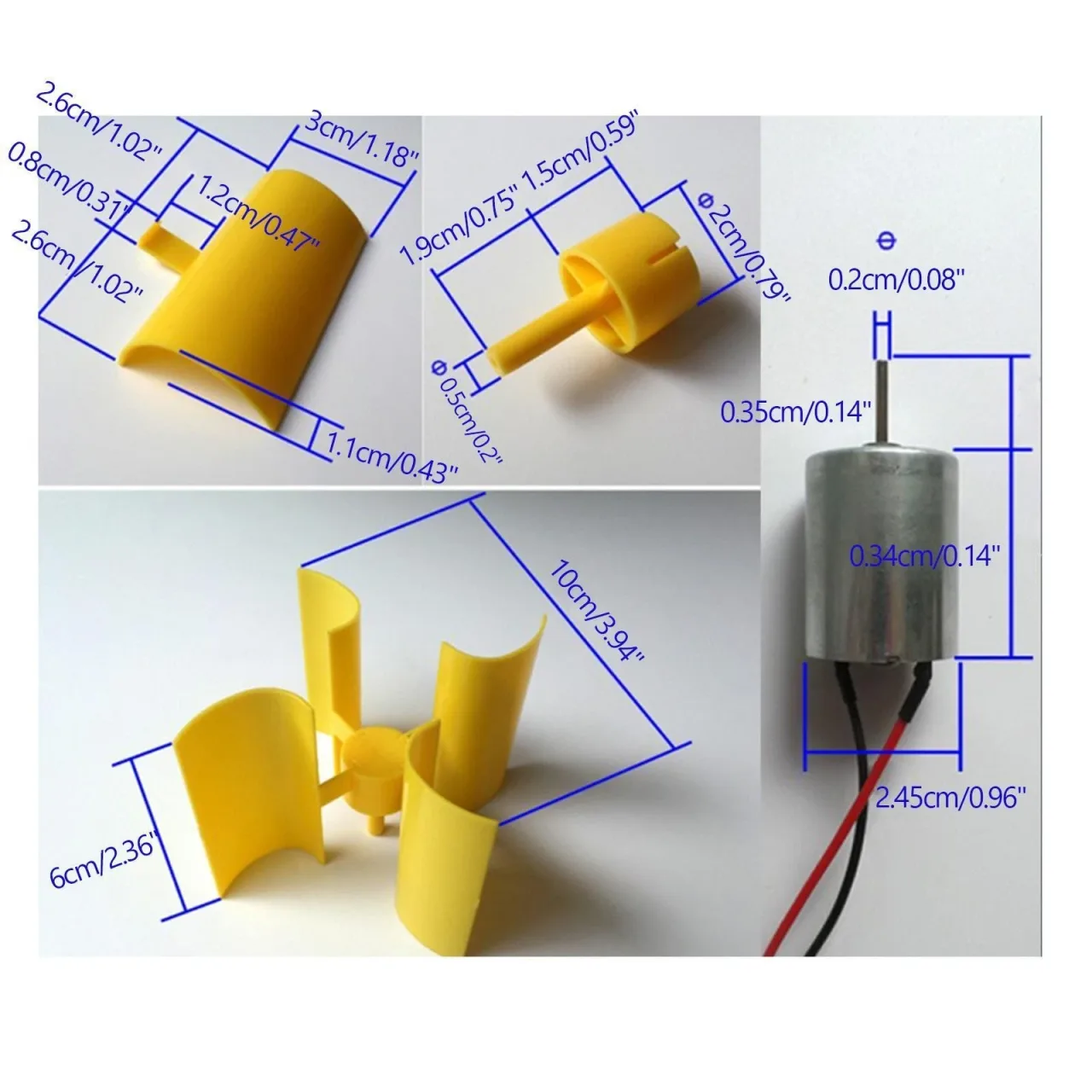
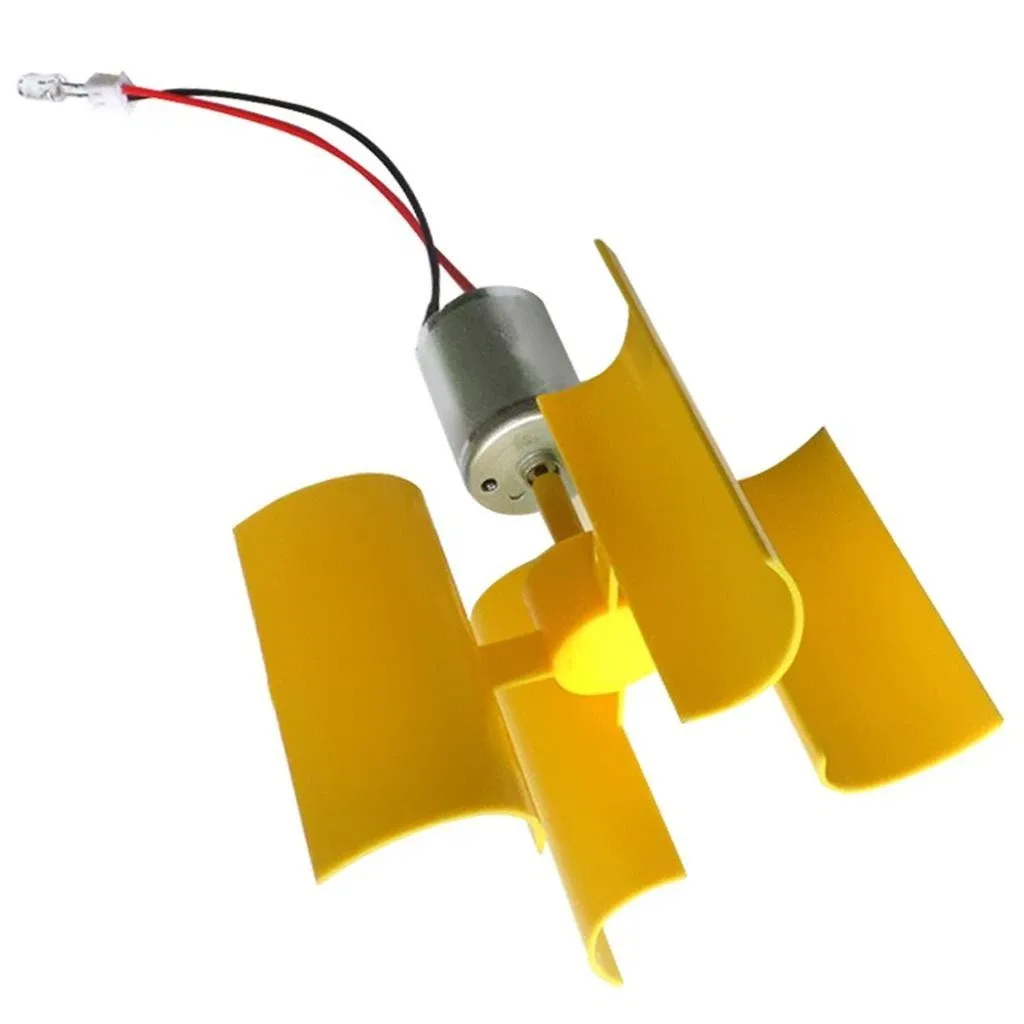
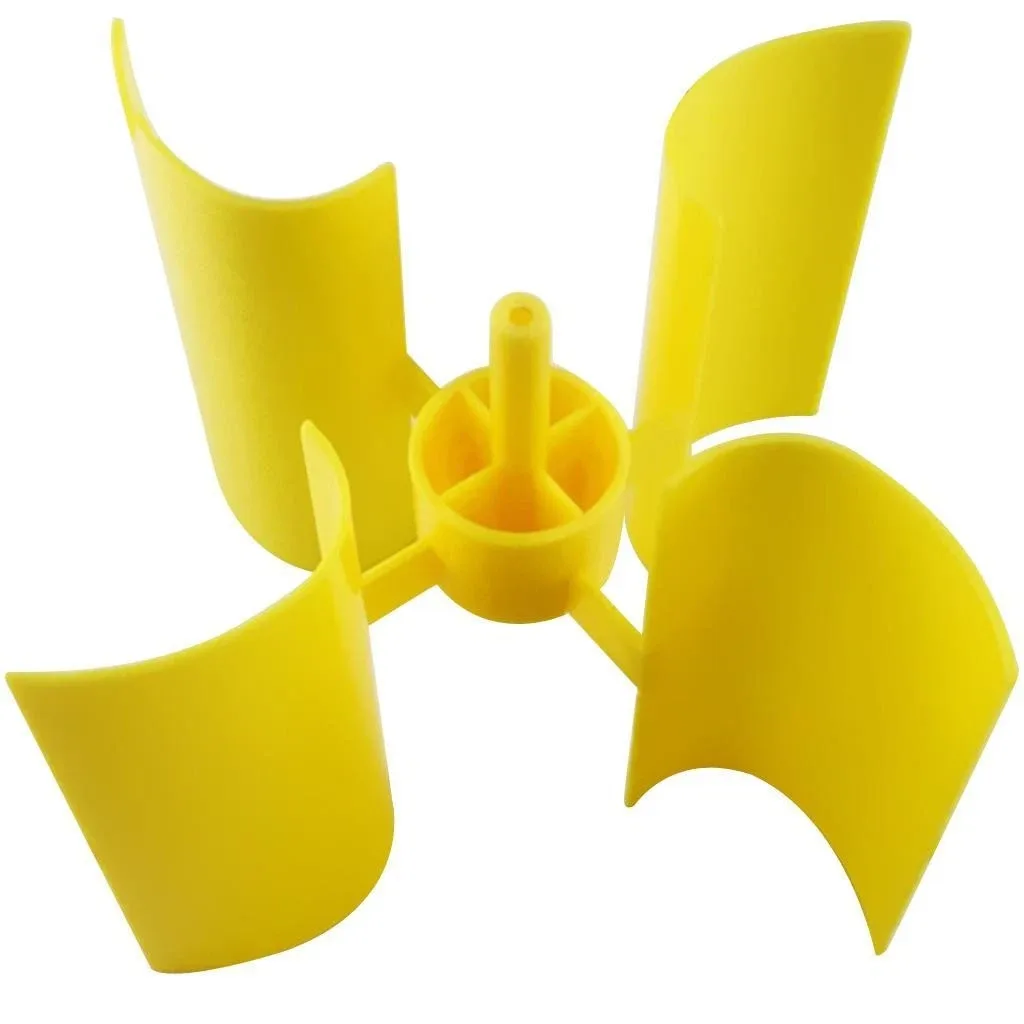
- The educational mini wind turbine kit, which includes pre-assembled blades.
- A small DC motor with an attached bulb.
- Plastic plates and structural pieces for the frame.
- Various screws and a small screwdriver for assembly.
- A small fan to provide the wind source.
- A digital multimeter (optional, for voltage measurement).
Wiring Guide
The wiring for this project is minimal and comes pre-connected within the kit. The two wires coming from the generator's internal windings are the only electrical connections you need to manage. They are connected to the motor/bulb assembly. The video demonstrates stripping these wires slightly to connect a voltmeter for testing (in video at 07:05). There is no complex wiring or soldering required.
Assembly Guide
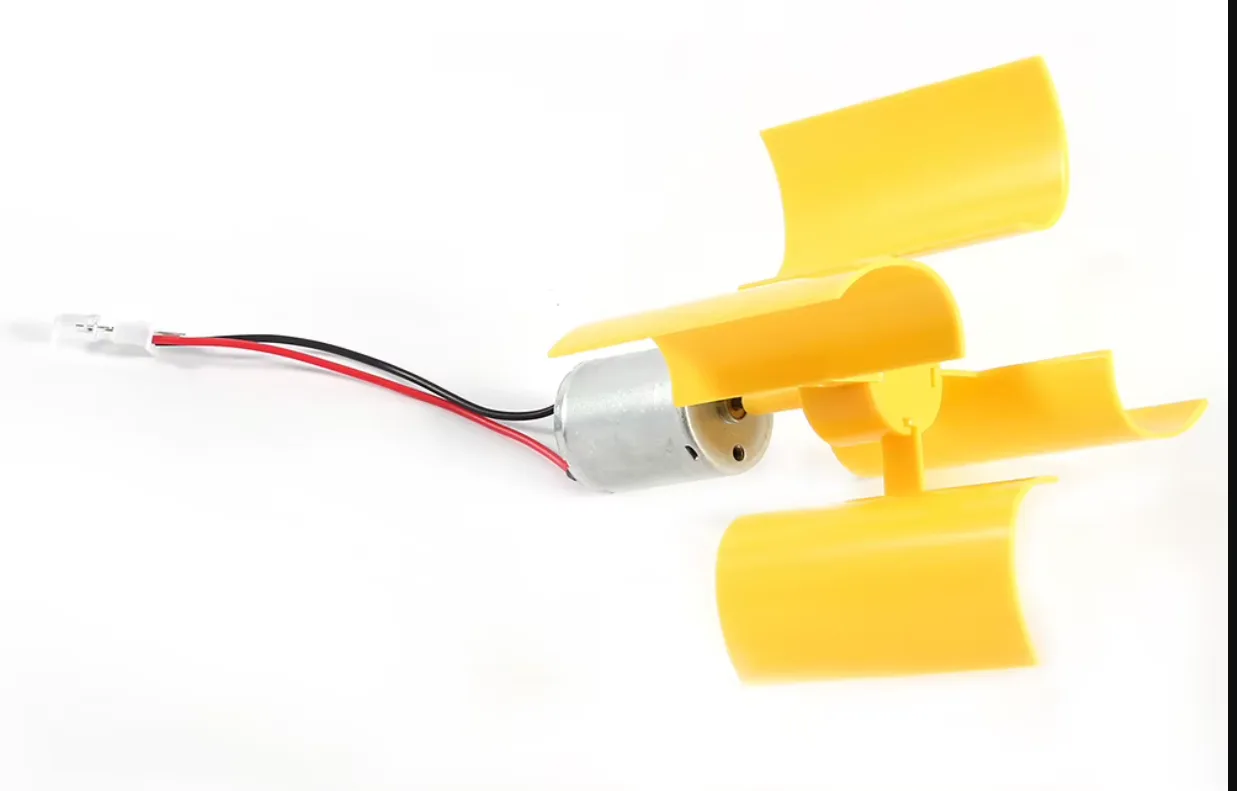
The assembly process is straightforward and is best understood by following the visual steps in the video. The key is to build a stable frame that holds the motor and bulb assembly steady while allowing the turbine blades to spin freely.
- Prepare the Base: Begin by identifying the main plates and structural pieces. The video shows using a long screw to attach a support piece that will hold the motor in the correct orientation (in video at 03:39).
- Mount the Motor: The motor, which has the bulb attached, is placed in a holder. Screws are used to secure it, ensuring it is stable and will not rotate when the turbine spins (in video at 04:28).
- Attach the Turbine: The turbine blade assembly is connected to the motor's shaft. This connection is what will spin the magnet inside the generator.
- Stabilize the Setup: Additional plastic pieces are used to brace the motor and keep the entire structure rigid. The video emphasizes that a stable setup is crucial to prevent the motor from twisting when the fan is blowing (in video at 05:13).
Testing and Demonstration
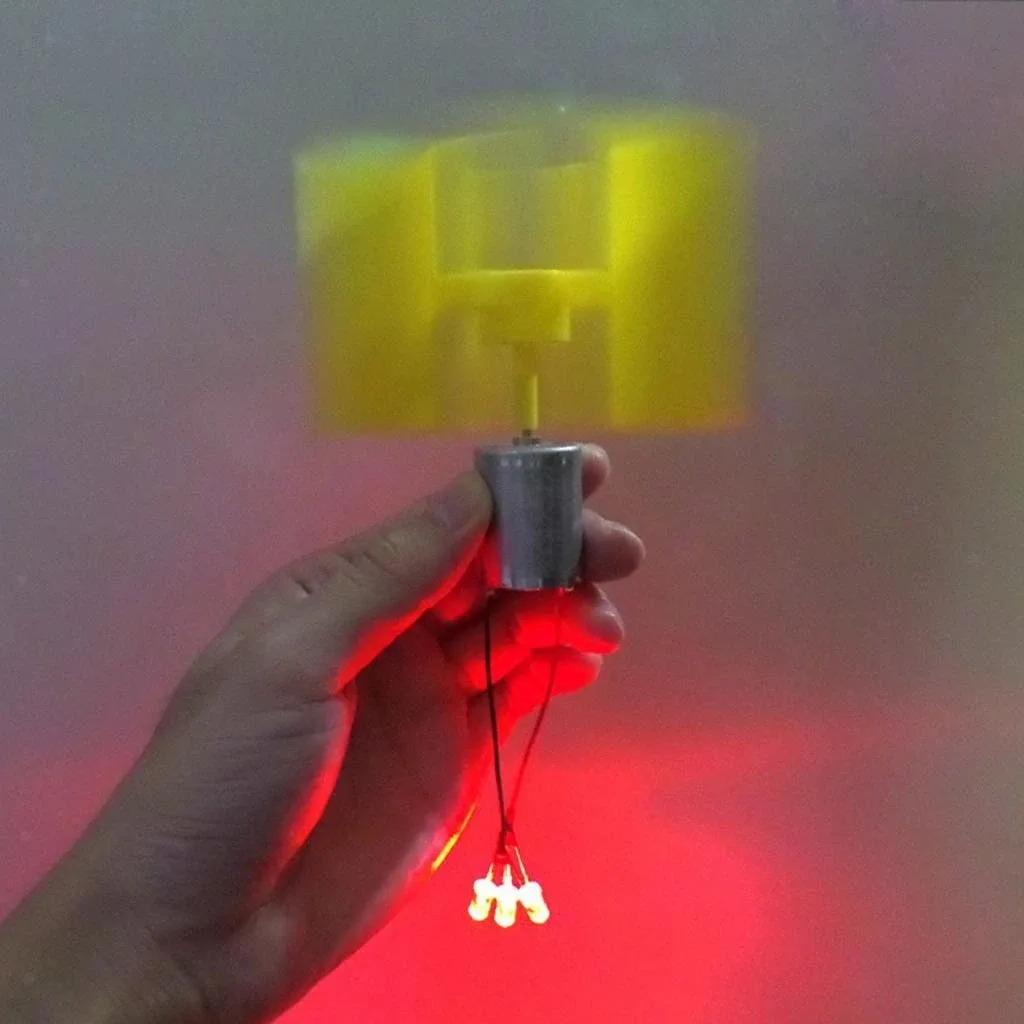
Once assembled, the demonstration is simple. Position a fan so it blows directly at the turbine blades. As the blades spin, the attached bulb should light up, providing a clear visual confirmation that electricity is being generated (in video at 06:35).
The video also shows a more quantitative test using a multimeter. By connecting the meter to the generator's output wires, you can measure the voltage. When the bulb is disconnected, the generator produces a higher voltage (almost 8 volts in the video). When the bulb is connected and lit, the voltage drops significantly (to around 3.2 volts) because some of the electrical energy is being consumed to power the light (in video at 08:06). This is a great demonstration of how load affects the output of a generator.
Live Project Demonstration
The video provides a complete live demonstration of the turbine in action. It shows the physical assembly, the turbine spinning under the power of a standard household fan, and the resulting illumination of the bulb. The demonstration also includes a clear visual of the multimeter readings, both with and without the bulb connected, providing real-world data to support the theoretical explanation of how the generator works.
Chapters
- [00:03] Introduction to the educational mini turbine
- [00:47] How the generator works
- [01:51] Unboxing the kit and parts overview
- [03:03] Assembly of the turbine frame
- [05:36] Mounting the turbine and motor
- [06:35] Testing with a fan and lighting the bulb
- [07:05] Measuring voltage output with a multimeter
- [09:00] Conclusion and summary
Obrázky
Veci, ktoré by ste mohli potrebovať
-
Amazon
-
AliExpressDIY Kit Small Motor Vertical Wind Turbines on AliExpresss.click.aliexpress.com
-
AliExpressEducational Mini Wind Turbine Generator Kit DC 0.1V-3Vs.click.aliexpress.com
Zdroje a referencie
Zatiaľ žiadne zdroje.
Súbory📁
Žiadne súbory nie sú k dispozícii.


![[4 pc] TC4452 VPA MOSFET / IGBT 12A Gate Power Driver TC4452VPA](https://i.ebayimg.com/images/g/g9sAAOSwreRmNM8G/s-l225.jpg)