Este tutorial faz parte de: Makerfabs MaTouch AI ESP32S3 2.8" Camera
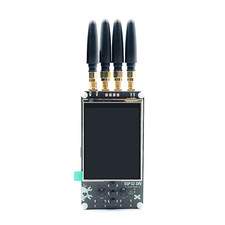
The latest MaTouch AI board integrate I2S voice input/I2S speaker/ 3 million camera OV3660/ 320*240 resolution display, with ESP32S3 strong processor& Wifi ability, to make this board a good tool/platform for AI development with ESP32.
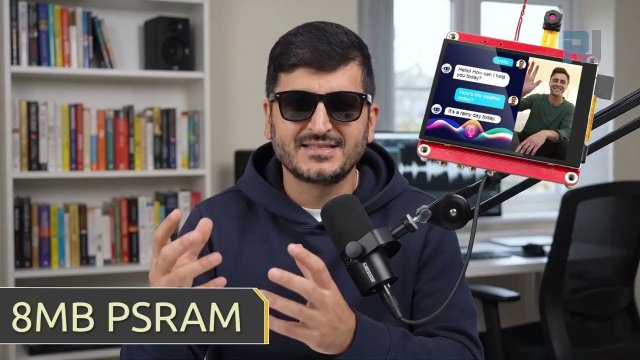
Makerfabs MaTouch ESP32-S3 2.8" camera Offline Face Detection on ESP32-S3 - No Internet, No API Key
A neural network running on the chip - no internet, no account, no subscription
Face detection running entirely on the ESP32-S3. Green boxes around faces, red dots on eyes, nose and mouth, and a live frame-rate counter. Unplug your router and it keeps working, because the neural network is in the chip’s own flash and runs on its vector instructions.
There is no cloud service here, no API key and nothing to sign up for. Nothing leaves the room.
 Offline Face Detection running on the MaTouch AI ESP32-S3 board
How it works
This uses Espressif’s esp-dl models: a two-stage detector where human_face_detect_msr01 proposes candidate faces and human_face_detect_mnp01 confirms them and finds the five facial keypoints. Both models ship inside ESP32 Arduino core 2.x - there is no library to install.
This is the reason every project on this site pins ESP32 core 2.0.17. The face models were removed in core 3.x, and this sketch will not compile there - you will get human_face_detect_msr01.hpp: No such file or directory.
Sound and an output pin
The board chirps through its speaker when a face arrives, and drives IO15 high while a face is in frame - so it can trigger a relay, a lamp or a lock. Set ENABLE_BEEP or ACTION_PIN at the top of the sketch to turn either off.
The camera and touch panel share a bus
The camera’s control interface uses the same two I2C wires as the touch panel, the clock and the fuel gauge. By default the camera driver installs its own I2C driver on those pins and the touch panel stops responding. The fix is three lines in the camera configuration:
config.pin_sccb_sda = -1;   // share the bus Wire already drives
config.pin_sccb_scl = -1;
config.sccb_i2c_port = 0;   // Wire is I2C port 0
with Wire.begin(39, 38) called before esp_camera_init(). No published example for this board does this, because none of them read the touch panel after starting the camera.
Honest limitations
The detector runs on a 240×240 frame, so small faces at a distance are missed.
Detection is not recognition - this sketch finds faces, it does not know whose they are. For that, see project 03b.
There is no anti-spoofing. A photograph of a face is still a face.
About the MaTouch AI ESP32-S3 2.8" board
Every project on this page runs on the MaTouch AI ESP32-S3 2.8" TFT ST7789V from Makerfabs. It is an all-in-one board: a colour touchscreen, a 3 megapixel camera, two microphones and a real speaker amplifier, all driven by an ESP32-S3 with 8 MB of PSRAM. That combination is what makes these AI projects possible on a single board with nothing else attached.
The 8 MB of PSRAM matters more than any other number here. It is what lets the board hold a camera frame, a few seconds of recorded audio, or a base64-encoded photo in memory at the same time - none of which fits in the ESP32’s normal RAM.
Manufacturer documentation: Makerfabs wiki page.
Key specifications
Processor: ESP32-S3, dual core 240 MHz, WiFi 2.4 GHz + Bluetooth 5.0
Memory: 16 MB flash, 8 MB PSRAM (required by nearly every project here)
Display: 2.8" IPS, 320×240, ST7789V driver, SPI
Touch: GT911 capacitive, tracks 5 fingers at once
Camera: OV3660, 3 megapixel, up to 2048×1536
Microphones: two INMP441 I2S digital mics (a genuine stereo pair)
Speaker: MAX98357A class-D amplifier, 3.2 W into 4 Ω
Storage: microSD card slot (SPI mode)
Power: USB-C, JST battery connector, TP4056 charger, power switch
Also on board: WS2812B RGB LED, PCF8563T battery-backed real-time clock, and a MAX17048 battery fuel gauge that is not listed in the official specifications
The two USB-C ports are not the same. The board’s speaker shares its signal pins (IO19 and IO20) with the native USB port, because those pins are the ESP32-S3’s hardwired USB data lines. Always upload and power through the CH340K USB-C port (the one beside the RESET button), and set USB CDC On Boot to Disabled. Use the wrong port and audio will misbehave or uploads will fail.
Arduino IDE settings
These settings matter. Most problems people report with this board are one of these being wrong, and they reset when you change the core version, so check them again after any change.
Setting | Value |
|---|---|
Board | ESP32S3 Dev Module |
ESP32 core version | 2.0.17 |
PSRAM | OPI PSRAM |
Flash Size | 16MB (128Mb) |
Partition Scheme | 16M Flash (3MB APP/9.9MB FATFS) |
USB CDC On Boot | Disabled |
Upload Speed | 921600 |
Erase All Flash Before Upload | Disabled |
Port | the CH340K USB-C port |
Use ESP32 core 2.0.17, not 3.x. Espressif removed the on-device face detection models in core 3, so the face projects will not compile there. Pinning 2.0.17 keeps every project on this page working with one configuration. In Boards Manager, the version dropdown lets you switch back and forth whenever you like.
Use GFX Library for Arduino version 1.5.6, not 1.6.x. The 1.6 releases are built for ESP32 core 3 and can hang at start-up on core 2.0.17. If your screen stays black after uploading, this is the first thing to check.
Required libraries
Install these through Tools → Manage Libraries in the Arduino IDE. Version numbers matter - please use the ones listed.
Library | Version | Author |
|---|---|---|
GFX Library for Arduino | 1.5.6 | moononournation |
bb_captouch | 1.3.1 | Larry Bank |
The face-detection models are not a library - they are included in ESP32 core 2.0.17 itself, so there is nothing extra to install.
Troubleshooting
Symptom | Cause and fix |
|---|---|
Screen stays black | Wrong GFX library version (use 1.5.6) or wrong board settings. |
|
|
Nothing uploads / no COM port | Wrong USB-C port, or the CH340 driver is not installed. |
Camera fails and never recovers | The camera’s reset line is tied to the board RESET button, so software cannot restart it. Press RESET. If it still fails, reseat the camera ribbon cable. |
Download the code
The complete Arduino sketch for this project, together with pins.h and everything else it needs, is free to download.
Unzip it, open the .ino file in the Arduino IDE, check the settings above, and upload through the CH340K USB-C port.
These are affiliate links. They cost you nothing extra and they help support the free code and tutorials on this site - thank you.
Este tutorial é parte de: Makerfabs MaTouch AI ESP32S3 2.8" Camera
- How to Use Makerfabs ESP32 3.5" TFT Capacitive Touch with Camera
- Makerfabs MaTouch ESP32-S3 2.8" Camera and Touchscreen: 3MP Photos to SD Card
- Makerfabs MaTouch ESP32-S3 2.8" camera Build an AI Voice Assistant on ESP32-S3 (Azure + DeepSeek)
- Makerfabs MaTouch ESP32-S3 2.8" camera ESP32-S3 AI Vision: Point the Camera and Ask What It Sees
/*
 * ===========================================================================
 *  03b_Face_Enroll  —  MaTouch AI ESP32-S3 2.8" TFT ST7789V
 * ===========================================================================
 *
 *  ---------------------------------------------------------------------------
 *  VIDEO AND WRITTEN INSTRUCTIONS
 *
 *      Watch the video : https://youtu.be/Px3FT47RV2M
 *      Full article    : https://robojax.com/RTJ850
 *                        ("Offline Face Detection" - wiring, settings, screenshots
 *                         and answers to the common problems)
 *
 *  Watching the video first will save you time - it shows the Arduino IDE
 *  settings and the library versions being set up step by step.
 *  ---------------------------------------------------------------------------
 *
 *  Guided, named face enrollment - fully offline. This is 03_Face_Offline
 *  grown up: instead of a bare ENROLL button, you manage a roster of names
 *  over the serial monitor, then enroll each person with an on-screen guide,
 *  a countdown, and multi-sample capture.
 *
 *  HOW TO USE
 *  ----------
 *  1. Open the Serial Monitor at 115200 and set up your roster ONCE:
 *         name 0 Ahmad
 *         name 1 Sara
 *         list
 *     Names are stored in flash (NVS) - they survive reboots.
 *
 *  2. On the board: tap ENROLL. The top-left shows "Enroll: Ahmad".
 *     Tap again to cycle to the next name. Cycling past the last name
 *     cancels enrollment.
 *
 *  3. The chosen person steps in front of the camera, close enough that
 *     their face fills the guide box. A 3-2-1 countdown runs, three samples
 *     are captured, and a green "enrolled" banner confirms. Enrollment then
 *     disarms itself.
 *
 *  4. From now on the board greets that face BY NAME on screen, SAYS THE
 *     WELCOME OUT LOUD if the matching clip is on the SD card, and the action
 *     pin (IO15) goes HIGH only for enrolled faces - face unlock.
 *
 *  SPOKEN WELCOMES (optional - the sketch works fine without them)
 *  ---------------------------------------------------------------
 *  Put WAV files in the root of the SD card, one per roster slot:
 *      /welcome_0.wav   plays for whoever is "name 0"
 *      /welcome_1.wav   plays for "name 1"   ... up to /welcome_7.wav
 *  Format: 16-bit PCM WAV (mono preferred; stereo is downmixed). Any sample
 *  rate works. Missing card or missing file -> the triple chirp plays instead.
 *
 *  Generate them in one go with  Makerfabs/make_welcome_wavs.ps1 , which uses
 *  Azure text-to-speech. Azure returns exactly 16 kHz / 16-bit / mono PCM -
 *  precisely what this board's amplifier wants. The cloud is used ONCE, when
 *  you make the files; the board itself never needs the internet.
 *
 *  Test a clip without a face in front of the camera:  play 0  (serial)
 *
 *  Serial commands:
 *      list             show the roster and who is enrolled this session
 *      name <n> <text>  set the name for slot n (0-7)
 *      del <n>          forget slot n's face for this session (name kept)
 *      clear            wipe all names from flash + forget all faces
 *      help             this list
 *
 *  HONEST LIMITATION (say it on camera): names persist across reboots,
 *  enrolled FACES do not - they live in RAM and are re-enrolled per session
 *  (~10 seconds per person). A permanent installation would add a custom
 *  flash partition for face storage.
 *
 *  ---------------------------------------------------------------------------
 *  TUNING KNOBS (the #defines just below this comment)
 *
 *  SAMPLES_PER_FACE (default 3)
 *      How many face samples are captured per enrollment, ~400 ms apart.
 *      More samples = more reliable recognition but a longer capture moment.
 *      3 is a good balance; use 4-5 if recognition feels unsure (glasses
 *      on/off, strong side light), 2 if you want the fastest possible demo.
 *      Each sample consumes one of the MAX_IDS (32) model slots, so
 *      8 people x 3 samples = 24 fits; 8 x 5 = 40 does NOT.
 *
 *  GATE_MIN_WIDTH (default 90)
 *      How close the person must be before capture arms (face box width in
 *      pixels, out of 240). Raise it to force closer/better enrollments,
 *      lower it if people cannot get close to the lens in your setup.
 *
 *  ---------------------------------------------------------------------------
 *  BOARD SETTINGS (Tools menu - EVERY line matters, wrong = black screen
 *  or compile errors. These reset when you switch cores - recheck them!)
 *
 *      Board            : ESP32S3 Dev Module
 *      ESP32 core       : 2.0.17   <-- REQUIRED. Face models were removed
 *                                      from core 3.x - will not compile there
 *      PSRAM            : OPI PSRAM        <-- required, nothing works without
 *      Flash Size       : 16MB (128Mb)
 *      Partition Scheme : 16M Flash (3MB APP/9.9MB FATFS)
 *      USB CDC On Boot  : Disabled
 *      Upload Speed     : 921600
 *      Port             : the CH340K USB-C port (the one near RESET)
 *
 *      Erase All Flash Contents Before Sketch Upload :  DISABLED
 *          ^^^ If this is Enabled, every upload wipes the non-volatile
 *          memory where the roster names live, and your names vanish on
 *          each reflash. This is the usual reason "the names were erased".
 *
 *  LIBRARIES
 *      GFX Library for Arduino   v1.5.6   (NOT 1.6.x - that pairs with core 3)
 *      bb_captouch               v1.3.1
 *      (face models and Preferences come with the ESP32 core itself)
 *
 *  ---------------------------------------------------------------------------
 *  FUNCTIONS IN THIS SKETCH
 *      rosterLoad()          load the 8 names from NVS flash at boot
 *      rosterSaveName(slot)  save one name to NVS
 *      rosterClearAll()      wipe names + session faces ("clear" command)
 *      namedCount() / enrolledCount() / nextNamedSlot(from)   roster queries
 *      printHelp() / printRoster()      serial command help + roster table
 *      handleSerialLine(l)   parse one serial command (list/name/del/clear)
 *      pollSerial()          non-blocking serial line reader
 *      spkInit()             I2S speaker output
 *      playTone(f,ms)        synthesised tone
 *      beepSeen()/beepEnrolled()/beepTick()/beepRecognized()   event sounds
 *      playWavFromSD(path)   play ANY WAV file on the SD card, by name
 *      playWelcome(slot)     play /welcome_<slot>.wav, by roster slot number
 *      drawGreeting()        the big latched NAME banner
 *      touchRaw(&x,&y)       raw touch read, mapped to screen coordinates
 *      touchTapped(&x,&y)    true exactly once per physical tap (edge detect)
 *      cameraInit()          camera at 240x240 RGB565, shared I2C bus
 *      gatePasses(results)   quality gate: one face, close, centred
 *      drawPanel(faces,fps)  right-hand info column + ENROLL button
 *      overlay(msg,col)      top strip inside the viewfinder
 *      bottomBar(msg,col)    recognised-name strip at the bottom
 *      setup() / loop()      boot / detect + recognise + enrollment machine
 *
 *  Robojax.com
 * ===========================================================================
 */

#define ENABLE_BEEP  1           // speaker chirps on events (IO19/20 - see pins.h)
#define ACTION_PIN   15          // HIGH while an ENROLLED face is in frame; -1 = off

#define ROSTER_SIZE      8
#define NAME_LEN        16
#define SAMPLES_PER_FACE 3       // multi-sample enrollment = reliable recognition
#define GATE_MIN_WIDTH  90       // face box must be at least this wide (come close)
#define ARMED_TIMEOUT_MS 30000

/* How long the big NAME banner stays on screen after the last time that face
 * was seen. It refreshes every time recognition succeeds, so while the person
 * is in front of the camera the banner simply stays up; when they walk away
 * it lingers this long and then clears. */
#define GREET_HOLD_MS  6000

#include <Arduino_GFX_Library.h>
#include <bb_captouch.h>
#include <Wire.h>
#include <Preferences.h>
#include <SPI.h>
#include <SD.h>
#include "esp_camera.h"
#include "pins.h"

#include "human_face_detect_msr01.hpp"
#include "human_face_detect_mnp01.hpp"
#include "face_recognition_tool.hpp"
#include "face_recognition_112_v1_s8.hpp"

#if ENABLE_BEEP
#include "driver/i2s.h"
#endif

/* HWSPI (not ESP32SPI): the SD card holding the welcome clips shares pins
 * 13/12/48 with the display, so BOTH must go through the same SPI driver.
 * Using two different drivers silently steals the pins from the LCD. */
Arduino_HWSPI *bus = new Arduino_HWSPI(
    TFT_DC, TFT_CS, TFT_SCLK, TFT_MOSI, TFT_MISO, &SPI, true);
Arduino_GFX *gfx = new Arduino_ST7789(bus, TFT_RES, 1, true);

BBCapTouch bbct;

HumanFaceDetectMSR01 stage1(0.1F, 0.5F, 10, 0.2F);
HumanFaceDetectMNP01 stage2(0.5F, 0.3F, 5);
FaceRecognition112V1S8 recognizer;

Preferences prefs;

/* --- roster --------------------------------------------------------------- */
char    names[ROSTER_SIZE][NAME_LEN];        // loaded from NVS at boot
uint8_t samples_of[ROSTER_SIZE] = {0};       // samples enrolled this session

/* esp-dl hands out sequential ids (0,1,2...) as we enroll. This maps each
 * model id back to a roster slot; -1 = forgotten (del command). */
#define MAX_IDS 32
int8_t id2slot[MAX_IDS];
int    ids_used = 0;

/* --- enrollment state machine --------------------------------------------- */
enum EnrollState { EN_IDLE, EN_ARMED, EN_COUNTDOWN, EN_CAPTURE, EN_DONE };
EnrollState en_state = EN_IDLE;
int      en_slot = -1;              // roster slot being enrolled
uint32_t en_t0 = 0;                 // timer for the current state
int      en_count = 0;              // countdown value / samples captured
uint32_t en_last_sample = 0;

/* --- layout --------------------------------------------------------------- */
#define BTN_X       242
#define BTN_W        78
#define BTN_ENROLL_Y 140      // ENROLL / NEXT
#define BTN_CLEAR_Y   92      // CLEAR - wipes the banner / cancels enrollment
#define BTN_H         44

/* The top VIEW_TOP rows of the viewfinder are RESERVED for the status text.
 * The camera image starts below them, so that text is never erased and
 * therefore never flickers. Camera row N still lands on screen row N, so the
 * detection boxes need no offset - they are simply clipped at the top. */
#define VIEW_TOP     18

/* --- serial line buffer ---------------------------------------------------- */
char ser_line[48];
int  ser_len = 0;

/* --- the "hello <name>" banner --------------------------------------------
 * Latched, not drawn per-frame-of-recognition: the detector occasionally
 * misses a frame, and without latching the name would flicker on and off as
 * the camera repaints over it. */
char     greet_name[NAME_LEN] = "";
float    greet_conf  = 0;
uint32_t greet_until = 0;        // millis() deadline; 0 = nothing showing

/* --- spoken welcome clips -------------------------------------------------
 * Optional WAV files on the SD card, one per roster slot:
 *     /welcome_0.wav  /welcome_1.wav  ...  /welcome_7.wav
 * Slot 0 is whoever you set with "name 0 Ahmad", so adding a person is:
 * set the name, drop the matching file, enroll the face.
 * If the card or the file is missing, the triple chirp plays instead -
 * the sketch never depends on the SD card being present.
 *
 * Generate the files with make_welcome_wavs.ps1 (in the Makerfabs folder):
 * Azure returns exactly 16 kHz / 16-bit / mono PCM, which is precisely what
 * this board's amplifier wants - so the cloud is used ONCE at build time and
 * never at run time. */
bool ok_sd = false;
int  pending_welcome = -1;       // slot whose clip should play after drawing


/* ===========================================================================
 *  Roster storage  —  names in NVS, keys "n0".."n7"
 * =========================================================================== */
void rosterLoad() {
  bool opened = prefs.begin("faces", true);      // read-only
  int found = 0;
  for (int i = 0; i < ROSTER_SIZE; i++) {
    char key[4];
    snprintf(key, sizeof(key), "n%d", i);
    String v = prefs.getString(key, "");
    strncpy(names[i], v.c_str(), NAME_LEN - 1);
    names[i][NAME_LEN - 1] = 0;
    if (names[i][0]) found++;
  }
  prefs.end();

  Serial.printf("NVS \"faces\": %s, %d name(s) restored\n",
                opened ? "found" : "not present",
                found);
  if (!opened || found == 0)
    Serial.println(F("  (first run, or the flash was erased - see the note about\n"
                     "   'Erase All Flash Contents Before Sketch Upload' in Tools)"));
}

/* Writes the name AND reads it straight back, so a silent NVS failure can
 * never look like success. */
void rosterSaveName(int slot) {
  char key[4];
  snprintf(key, sizeof(key), "n%d", slot);

  prefs.begin("faces", false);                   // read-write
  size_t written = prefs.putString(key, names[slot]);
  String back = prefs.getString(key, "");
  prefs.end();

  bool ok = (written > 0) && (back == String(names[slot]));
  Serial.printf("slot %d = \"%s\"  ->  flash %s\n",
                slot, names[slot], ok ? "OK (survives reboot)" : "WRITE FAILED");
  if (!ok)
    Serial.println(F("  NVS write failed - is the partition scheme still\n"
                     "  '16M Flash (3MB APP/9.9MB FATFS)'?"));
}

void rosterClearAll() {
  prefs.begin("faces", false);
  prefs.clear();
  prefs.end();
  memset(names, 0, sizeof(names));
  memset(samples_of, 0, sizeof(samples_of));
  for (int i = 0; i < MAX_IDS; i++) id2slot[i] = -1;
}

int namedCount() {
  int n = 0;
  for (int i = 0; i < ROSTER_SIZE; i++) if (names[i][0]) n++;
  return n;
}

int enrolledCount() {
  int n = 0;
  for (int i = 0; i < ROSTER_SIZE; i++) if (samples_of[i]) n++;
  return n;
}

/* next named slot at or after 'from'; -1 if none */
int nextNamedSlot(int from) {
  for (int i = from; i < ROSTER_SIZE; i++) if (names[i][0]) return i;
  return -1;
}


/* ===========================================================================
 *  Serial commands
 * =========================================================================== */
void printHelp() {
  Serial.println(F("\nCommands:"));
  Serial.println(F("  list             show roster"));
  Serial.println(F("  name <n> <text>  set name for slot n (0-7)"));
  Serial.println(F("  del <n>          forget slot n's face (this session; name kept)"));
  Serial.println(F("  play <n>         test-play /welcome_<n>.wav from the SD card"));
  Serial.println(F("  clear            wipe all names + faces (reboot for a full reset)"));
  Serial.println(F("  help             this list\n"));
}

void printRoster() {
  Serial.println(F("\nslot  name             enrolled"));
  Serial.println(F("----  ---------------  --------"));
  for (int i = 0; i < ROSTER_SIZE; i++) {
    Serial.printf("  %d   %-15s  %s\n", i,
                  names[i][0] ? names[i] : "-",
                  samples_of[i] ? "YES" : "no");
  }
  Serial.printf("Names persist in flash. Faces are RAM-only (%d enrolled this session).\n\n",
                enrolledCount());
}

void handleSerialLine(char *line) {
  while (*line == ' ') line++;

  if (strncmp(line, "list", 4) == 0) {
    printRoster();

  } else if (strncmp(line, "name ", 5) == 0) {
    int slot = -1;
    char text[NAME_LEN] = {0};
    if (sscanf(line + 5, "%d %15[^\n]", &slot, text) == 2 &&
        slot >= 0 && slot < ROSTER_SIZE && text[0]) {
      strncpy(names[slot], text, NAME_LEN - 1);
      rosterSaveName(slot);
      Serial.printf("slot %d = \"%s\" (saved to flash)\n", slot, names[slot]);
    } else {
      Serial.println(F("usage: name <0-7> <text>"));
    }

  } else if (strncmp(line, "del ", 4) == 0) {
    int slot = atoi(line + 4);
    if (slot >= 0 && slot < ROSTER_SIZE) {
      // esp-dl on core 2.x has no reliable per-id delete, so we unmap instead:
      // the samples stay in the model but now report as "unknown".
      for (int i = 0; i < MAX_IDS; i++) if (id2slot[i] == slot) id2slot[i] = -1;
      samples_of[slot] = 0;
      Serial.printf("slot %d face forgotten (name \"%s\" kept)\n", slot, names[slot]);
    }

  } else if (strncmp(line, "play ", 5) == 0) {
    /* Test a welcome clip without needing a face in front of the camera. */
    int slot = atoi(line + 5);
    if (!playWelcome(slot))
      Serial.printf("no /welcome_%d.wav (or no SD card)\n", slot);

  } else if (strncmp(line, "clear", 5) == 0) {
    rosterClearAll();
    Serial.println(F("all names wiped from flash, all faces forgotten."));
    Serial.println(F("(reboot to also empty the face model itself)"));

  } else {
    printHelp();
  }
}

void pollSerial() {
  while (Serial.available()) {
    char c = Serial.read();
    if (c == '\n' || c == '\r') {
      if (ser_len > 0) {
        ser_line[ser_len] = 0;
        handleSerialLine(ser_line);
        ser_len = 0;
      }
    } else if (ser_len < (int)sizeof(ser_line) - 1) {
      ser_line[ser_len++] = c;
    }
  }
}


/* ===========================================================================
 *  Beep  —  event sounds. One chirp = face seen, rising pair = enrolled.
 * =========================================================================== */
#if ENABLE_BEEP
void spkInit() {
  i2s_config_t cfg = {
    .mode = (i2s_mode_t)(I2S_MODE_MASTER | I2S_MODE_TX),
    .sample_rate = 16000,
    .bits_per_sample = I2S_BITS_PER_SAMPLE_16BIT,
    .channel_format = I2S_CHANNEL_FMT_ONLY_LEFT,
    .communication_format = I2S_COMM_FORMAT_STAND_I2S,
    .intr_alloc_flags = ESP_INTR_FLAG_LEVEL1,
    .dma_buf_count = 4,
    .dma_buf_len = 256,
    .use_apll = false,
    .tx_desc_auto_clear = true,
    .fixed_mclk = 0
  };
  i2s_pin_config_t pins = {
    .mck_io_num = I2S_PIN_NO_CHANGE,
    .bck_io_num = I2S_SPK_BCLK,
    .ws_io_num = I2S_SPK_LRC,
    .data_out_num = I2S_SPK_DOUT,
    .data_in_num = I2S_PIN_NO_CHANGE
  };
  i2s_driver_install(I2S_SPK_PORT, &cfg, 0, NULL);
  i2s_set_pin(I2S_SPK_PORT, &pins);
  i2s_zero_dma_buffer(I2S_SPK_PORT);
}

void playTone(float freq, int ms) {
  int n = 16 * ms;
  int16_t *buf = (int16_t *)malloc(n * 2);
  if (!buf) return;
  int fade = n / 8;
  for (int i = 0; i < n; i++) {
    float env = 1.0f;
    if (i < fade)          env = (float)i / fade;
    else if (i > n - fade) env = (float)(n - i) / fade;
    buf[i] = (int16_t)(sinf(2 * PI * freq * i / 16000.0f) * 11000 * env);
  }
  size_t w = 0;
  i2s_write(I2S_SPK_PORT, buf, n * 2, &w, portMAX_DELAY);
  free(buf);
}

/* playTone(0, ms) is silence - sin(0) is zero - which is how the triple
 * beep gets clean gaps between its chirps. */
void beepSeen()     { playTone(1000, 90); }                       // a face arrived
void beepEnrolled() { playTone(900, 90); playTone(1400, 140); }   // enrollment done
void beepTick()     { playTone(1200, 45); }                       // countdown tick

/* THREE quick high chirps = "I know who this is". Deliberately different
 * from the single beep that just means "somebody is there". */
void beepRecognized() {
  playTone(1600, 80);
  playTone(0,    70);
  playTone(1600, 80);
  playTone(0,    70);
  playTone(1600, 80);
}

/* ===========================================================================
 *  playWavFromSD(path)  —  play any WAV file on the SD card, by name.
 *
 *      playWavFromSD("/welcome_0.wav");
 *      playWavFromSD("/doorbell.wav");
 *
 *  Returns true if something was played. Handles 16-bit PCM, mono or stereo
 *  (stereo is downmixed), at any sample rate - the I2S clock is retuned to
 *  match the file and put back to 16 kHz afterwards so the beeps still work.
 *
 *  The whole clip is loaded into PSRAM before playing: reading the SD card
 *  in the middle of playback would stutter, because the card shares the SPI
 *  bus with the display.
 * =========================================================================== */
bool playWavFromSD(const char *path) {
  if (!ok_sd) { Serial.printf("no SD card - cannot play %s\n", path); return false; }

  File f = SD.open(path, FILE_READ);
  if (!f) { Serial.printf("not found: %s\n", path); return false; }

  char riff[12];
  if (f.read((uint8_t *)riff, 12) != 12 ||
      memcmp(riff, "RIFF", 4) || memcmp(riff + 8, "WAVE", 4)) {
    Serial.printf("%s is not a WAV file\n", path);
    f.close();
    return false;
  }

  uint32_t rate = 16000, data_len = 0;
  uint16_t channels = 1, bits = 16;

  /* walk the RIFF chunks to find "fmt " and "data" - do not assume the
   * header is exactly 44 bytes, some encoders add extra chunks */
  while (f.available() >= 8) {
    char cid[4];
    uint32_t csize = 0;
    f.read((uint8_t *)cid, 4);
    f.read((uint8_t *)&csize, 4);

    if (!memcmp(cid, "fmt ", 4)) {
      uint8_t fmt[16] = {0};
      uint32_t want = csize < 16 ? csize : 16;
      f.read(fmt, want);
      channels = fmt[2] | (fmt[3] << 8);
      rate     = (uint32_t)fmt[4] | ((uint32_t)fmt[5] << 8) |
                 ((uint32_t)fmt[6] << 16) | ((uint32_t)fmt[7] << 24);
      bits     = fmt[14] | (fmt[15] << 8);
      if (csize > want) f.seek(f.position() + (csize - want));
    } else if (!memcmp(cid, "data", 4)) {
      data_len = csize;
      break;                                   // now positioned at the samples
    } else {
      f.seek(f.position() + csize + (csize & 1));   // chunks are word-aligned
    }
  }

  if (bits != 16 || data_len == 0) {
    Serial.printf("%s: need 16-bit PCM (got %u-bit, %u bytes)\n",
                  path, bits, (unsigned)data_len);
    f.close();
    return false;
  }

  const uint32_t CAP = 1024UL * 1024UL;        // ~30 s at 16 kHz mono
  if (data_len > CAP) data_len = CAP;

  uint8_t *pcm = (uint8_t *)ps_malloc(data_len);
  if (!pcm) { Serial.println("PSRAM alloc failed"); f.close(); return false; }

  uint32_t got = f.read(pcm, data_len);
  f.close();
  if (got < 64) { free(pcm); return false; }

  /* stereo -> mono, in place */
  if (channels == 2) {
    int16_t *s = (int16_t *)pcm;
    uint32_t pairs = got / 4;
    for (uint32_t i = 0; i < pairs; i++)
      s[i] = (int16_t)(((int32_t)s[i * 2] + s[i * 2 + 1]) / 2);
    got = pairs * 2;
  }

  Serial.printf("playing %s  (%u KB, %u Hz, %u ch)\n",
                path, (unsigned)(got / 1024), (unsigned)rate, channels);

  i2s_set_sample_rates(I2S_SPK_PORT, rate);
  static const uint8_t lead_in[320] = {0};     // brief silence softens the pop
  size_t w = 0;
  i2s_write(I2S_SPK_PORT, lead_in, sizeof(lead_in), &w, portMAX_DELAY);
  i2s_write(I2S_SPK_PORT, pcm, got, &w, portMAX_DELAY);
  i2s_write(I2S_SPK_PORT, lead_in, sizeof(lead_in), &w, portMAX_DELAY);
  delay(120);
  i2s_zero_dma_buffer(I2S_SPK_PORT);
  i2s_set_sample_rates(I2S_SPK_PORT, 16000);   // back to the beep rate

  free(pcm);
  return true;
}

/* playWelcome(slot)  —  same thing, addressed by roster slot number.
 * Plays /welcome_<slot>.wav . Returns false if there is no such file, so
 * the caller can fall back to the chirps. */
bool playWelcome(int slot) {
  if (slot < 0 || slot >= ROSTER_SIZE) return false;
  char path[24];
  snprintf(path, sizeof(path), "/welcome_%d.wav", slot);
  return playWavFromSD(path);
}
#else
bool playWavFromSD(const char *path) { (void)path; return false; }
bool playWelcome(int slot)           { (void)slot; return false; }
void beepSeen()       {}
void beepEnrolled()   {}
void beepTick()       {}
void beepRecognized() {}
#endif


/* ===========================================================================
 *  Touch  —  edge-detected: one event per physical tap
 * =========================================================================== */
bool touchRaw(uint16_t *x, uint16_t *y) {
  TOUCHINFO ti;
  if (!bbct.getSamples(&ti)) return false;
  if (ti.count < 1) return false;
  *x = ti.y[0];
  *y = (ti.x[0] > 240) ? 0 : (240 - ti.x[0]);
  return true;
}

/* returns true exactly once per tap, with the tap position */
bool touchTapped(uint16_t *tx, uint16_t *ty) {
  static bool down = false;
  static uint8_t misses = 0;
  uint16_t x, y;
  if (touchRaw(&x, &y)) {
    misses = 0;
    if (!down) { down = true; *tx = x; *ty = y; return true; }
  } else if (down) {
    if (++misses >= 4) { down = false; misses = 0; }
  }
  return false;
}


/* ===========================================================================
 *  Camera  —  identical to the proven 03 init (shared SCCB on Wire)
 * =========================================================================== */
bool cameraInit() {
  camera_config_t c;
  c.ledc_channel = LEDC_CHANNEL_0;
  c.ledc_timer   = LEDC_TIMER_0;
  c.pin_d0 = CAM_PIN_D0;  c.pin_d1 = CAM_PIN_D1;
  c.pin_d2 = CAM_PIN_D2;  c.pin_d3 = CAM_PIN_D3;
  c.pin_d4 = CAM_PIN_D4;  c.pin_d5 = CAM_PIN_D5;
  c.pin_d6 = CAM_PIN_D6;  c.pin_d7 = CAM_PIN_D7;
  c.pin_xclk     = CAM_PIN_XCLK;
  c.pin_pclk     = CAM_PIN_PCLK;
  c.pin_vsync    = CAM_PIN_VSYNC;
  c.pin_href     = CAM_PIN_HREF;
  c.pin_sccb_sda = -1;               // share the bus Wire already drives
  c.pin_sccb_scl = -1;
  c.sccb_i2c_port = 0;
  c.pin_pwdn     = CAM_PIN_PWDN;
  c.pin_reset    = CAM_PIN_RESET;
  c.xclk_freq_hz = 20000000;
  c.frame_size   = FRAMESIZE_240X240;
  c.pixel_format = PIXFORMAT_RGB565;
  c.grab_mode    = CAMERA_GRAB_WHEN_EMPTY;
  c.fb_location  = CAMERA_FB_IN_PSRAM;
  c.jpeg_quality = 12;
  c.fb_count     = 2;

  if (esp_camera_init(&c) != ESP_OK) return false;
  sensor_t *s = esp_camera_sensor_get();
  if (s) { s->set_hmirror(s, 1); s->set_vflip(s, 1); s->set_brightness(s, 1); }
  return true;
}


/* ===========================================================================
 *  Quality gate: exactly one face, close enough, roughly centred
 * =========================================================================== */
bool gatePasses(std::list<dl::detect::result_t> &results) {
  if (results.size() != 1) return false;
  dl::detect::result_t &r = results.front();
  int w  = r.box[2] - r.box[0];
  int cx = (r.box[0] + r.box[2]) / 2;
  int cy = (r.box[1] + r.box[3]) / 2;
  if (w < GATE_MIN_WIDTH) return false;
  if (cx < 48 || cx > 192) return false;
  if (cy < 48 || cy > 192) return false;
  return true;
}


/* ===========================================================================
 *  UI
 * =========================================================================== */
void drawPanel(int faces, float fps) {
  gfx->fillRect(BTN_X, 0, BTN_W, 240, BLACK);
  gfx->setTextSize(1);

  gfx->setTextColor(CYAN);
  gfx->setCursor(BTN_X + 2, 4);   gfx->print("OFFLINE");
  gfx->setCursor(BTN_X + 2, 14);  gfx->print("face enroll");
  gfx->setCursor(BTN_X + 2, 24);  gfx->print("Robojax.com");

  gfx->setTextColor(WHITE);
  gfx->setCursor(BTN_X + 2, 44);  gfx->printf("faces: %d", faces);
  gfx->setCursor(BTN_X + 2, 56);  gfx->printf("FPS: %.1f", fps);
  gfx->setCursor(BTN_X + 2, 68);  gfx->printf("known: %d/%d", enrolledCount(), namedCount());

  // CLEAR button - wipes the name banner, or cancels an enrollment in progress
  gfx->fillRoundRect(BTN_X, BTN_CLEAR_Y, BTN_W, BTN_H, 6, gfx->color565(110, 35, 35));
  gfx->drawRoundRect(BTN_X, BTN_CLEAR_Y, BTN_W, BTN_H, 6, WHITE);
  gfx->setTextColor(WHITE);
  gfx->setCursor(BTN_X + 18, BTN_CLEAR_Y + 18);
  gfx->print("CLEAR");

  // ENROLL button
  uint16_t col = (en_state == EN_IDLE) ? gfx->color565(0, 90, 160)
                                       : gfx->color565(160, 90, 0);
  gfx->fillRoundRect(BTN_X, BTN_ENROLL_Y, BTN_W, BTN_H, 6, col);
  gfx->drawRoundRect(BTN_X, BTN_ENROLL_Y, BTN_W, BTN_H, 6, WHITE);
  gfx->setTextColor(WHITE);
  gfx->setCursor(BTN_X + 14, BTN_ENROLL_Y + 16);
  gfx->print(en_state == EN_IDLE ? "ENROLL" : "NEXT >");

  gfx->setTextColor(YELLOW);
  gfx->setCursor(BTN_X + 2, 196); gfx->print("names kept,");
  gfx->setCursor(BTN_X + 2, 206); gfx->print("faces reset");
  gfx->setCursor(BTN_X + 2, 216); gfx->print("at boot");
}

/* Top status strip. Redraws ONLY when the text actually changes - the camera
 * never covers this strip, so anything drawn here stays put and cannot
 * flicker. Call overlay("") to clear it. */
void overlay(const char *msg, uint16_t colour) {
  static char     last[72] = "\x01";      // impossible value = force first draw
  static uint16_t last_col = 0;
  if (colour == last_col && strncmp(last, msg, sizeof(last) - 1) == 0) return;
  strncpy(last, msg, sizeof(last) - 1);
  last[sizeof(last) - 1] = 0;
  last_col = colour;

  gfx->fillRect(0, 0, 240, VIEW_TOP, BLACK);
  if (!msg[0]) return;
  gfx->setTextSize(1);
  gfx->setTextColor(colour);
  gfx->setCursor(4, 5);
  gfx->print(msg);
}

void bottomBar(const char *msg, uint16_t colour) {
  gfx->fillRect(0, 224, 240, 16, BLACK);
  gfx->setTextSize(1);
  gfx->setTextColor(colour);
  gfx->setCursor(4, 228);
  gfx->print(msg);
}

/* The big green NAME banner. Redrawn every frame while the greeting is live,
 * so the camera never paints over it. */
void drawGreeting() {
  const int bx = 6, by = 152, bw = 228, bh = 62;
  gfx->fillRoundRect(bx, by, bw, bh, 8, gfx->color565(0, 120, 45));
  gfx->drawRoundRect(bx, by, bw, bh, 8, WHITE);

  int len = strlen(greet_name);
  int ts  = (len <= 11) ? 3 : 2;              // shrink for very long names
  int tw  = len * 6 * ts;
  gfx->setTextSize(ts);
  gfx->setTextColor(WHITE);
  gfx->setCursor(bx + (bw - tw) / 2, by + 10);
  gfx->print(greet_name);

  gfx->setTextSize(1);
  gfx->setTextColor(gfx->color565(200, 255, 200));
  gfx->setCursor(bx + 8, by + bh - 16);
  gfx->printf("RECOGNIZED   %.0f%%   offline", greet_conf);
}


/* ===========================================================================
 *  SETUP
 * =========================================================================== */
void setup() {
  Serial.begin(115200);
  delay(400);
  Serial.println(F("\n=== 03b Face Enrollment  |  Robojax.com ==="));

  for (int i = 0; i < MAX_IDS; i++) id2slot[i] = -1;
  rosterLoad();

  pinMode(TFT_BLK, OUTPUT);
  digitalWrite(TFT_BLK, LOW);
  pinMode(SD_CS, OUTPUT);
  digitalWrite(SD_CS, HIGH);

  // one shared SPI bus for the display AND the SD card, started before either
  SPI.begin(TFT_SCLK, TFT_MISO, TFT_MOSI);

#if ACTION_PIN >= 0
  pinMode(ACTION_PIN, OUTPUT);
  digitalWrite(ACTION_PIN, LOW);
#endif

  gfx->begin();
  gfx->fillScreen(BLACK);
  digitalWrite(TFT_BLK, HIGH);

  bbct.init(TOUCH_SDA, TOUCH_SCL, TOUCH_RST, TOUCH_INT);
  delay(50);

  Wire.begin(I2C_SDA, I2C_SCL, 100000);
  delay(20);

#if ENABLE_BEEP
  spkInit();
#endif

  gfx->setTextColor(YELLOW);
  gfx->setTextSize(1);
  gfx->setCursor(4, 4);
  gfx->print("starting camera + neural networks...");

  if (!cameraInit()) {
    gfx->fillScreen(RED);
    gfx->setTextColor(WHITE);
    gfx->setTextSize(2);
    gfx->setCursor(20, 100);
    gfx->print("CAMERA FAILED");
    gfx->setTextSize(1);
    gfx->setCursor(20, 130);
    gfx->print("Press RESET (camera reset = board reset)");
    while (1) delay(1000);
  }

  /* SD card LAST - after the camera. The camera's DMA buffer must come from
   * internal RAM, and mounting the card first can starve it ("cam_dma_config
   * failed"). The card is entirely optional here: no card just means the
   * triple chirp is used instead of spoken welcomes. */
  const uint32_t sd_speeds[] = {40000000, 20000000, 10000000, 4000000};
  for (uint8_t i = 0; i < 4 && !ok_sd; i++)
    if (SD.begin(SD_CS, SPI, sd_speeds[i])) ok_sd = true;
  digitalWrite(SD_CS, HIGH);
  Serial.println(ok_sd ? "SD ok - looking for /welcome_<slot>.wav clips"
                       : "no SD card - using chirps instead of spoken welcomes");

  gfx->fillScreen(BLACK);
  drawPanel(0, 0);

  printRoster();
  printHelp();
  if (namedCount() == 0)
    Serial.println(F(">> Roster is empty. Start with:  name 0 YourName"));
}


/* ===========================================================================
 *  LOOP
 * =========================================================================== */
void loop() {
  uint32_t t0 = millis();
  pollSerial();

  camera_fb_t *fb = esp_camera_fb_get();
  if (!fb) { delay(10); return; }

  std::list<dl::detect::result_t> &candidates =
      stage1.infer((uint16_t *)fb->buf, {(int)fb->height, (int)fb->width, 3});
  std::list<dl::detect::result_t> &results =
      stage2.infer((uint16_t *)fb->buf, {(int)fb->height, (int)fb->width, 3}, candidates);

  int  faces = results.size();
  bool known_face = false;
  char who[36] = "";

  /* ---- recognition (skip while capturing - the samples ARE the model) ---- */
  if (faces > 0 && en_state != EN_CAPTURE && ids_used > 0) {
    dl::detect::result_t &best = results.front();
    face_info_t info = recognizer.recognize((uint16_t *)fb->buf,
                                            {(int)fb->height, (int)fb->width, 3},
                                            best.keypoint);
    if (info.id >= 0 && info.id < MAX_IDS && id2slot[info.id] >= 0) {
      known_face = true;
      const char *nm = names[id2slot[info.id]];

      /* A greeting is "new" if it is a different person, or if the previous
       * banner had already expired (they walked away and came back). Only a
       * new greeting chirps - otherwise it would beep every frame. */
      bool is_new = (strcmp(greet_name, nm) != 0) || (millis() > greet_until);
      strncpy(greet_name, nm, NAME_LEN - 1);
      greet_name[NAME_LEN - 1] = 0;
      greet_conf  = info.similarity * 100;
      greet_until = millis() + GREET_HOLD_MS;
      if (is_new) {
        Serial.printf("recognized: %s (%.0f%%)\n", nm, greet_conf);
        /* Queue the clip instead of playing it here: the name banner is
         * drawn further down the loop, and we want the viewer to SEE the
         * name before the board says it. */
        pending_welcome = id2slot[info.id];
      }
    } else if (info.id >= 0) {
      snprintf(who, sizeof(who), "forgotten face");
    } else {
      snprintf(who, sizeof(who), "unknown");
    }
  }

  /* ---- enrollment state machine ---- */
  bool gate = gatePasses(results);

  switch (en_state) {
    case EN_IDLE:
      break;

    case EN_ARMED:
      if (millis() - en_t0 > ARMED_TIMEOUT_MS) {
        en_state = EN_IDLE;
        Serial.println(F("enrollment timed out"));
      } else if (gate) {
        en_state = EN_COUNTDOWN;
        en_count = 3;
        en_t0 = millis();
        beepTick();
      }
      break;

    case EN_COUNTDOWN:
      if (!gate) {                                   // they moved away - re-arm
        en_state = EN_ARMED;
        en_t0 = millis();
      } else if (millis() - en_t0 > 700) {
        en_t0 = millis();
        if (--en_count <= 0) {
          en_state = EN_CAPTURE;
          en_count = 0;
          en_last_sample = 0;
        } else {
          beepTick();
        }
      }
      break;

    case EN_CAPTURE:
      if (gate && millis() - en_last_sample > 400) {
        en_last_sample = millis();
        dl::detect::result_t &best = results.front();
        recognizer.enroll_id((uint16_t *)fb->buf,
                             {(int)fb->height, (int)fb->width, 3},
                             best.keypoint, "", false /* RAM only */);
        if (ids_used < MAX_IDS) id2slot[ids_used++] = en_slot;
        en_count++;
        Serial.printf("sample %d/%d for \"%s\"\n", en_count, SAMPLES_PER_FACE, names[en_slot]);
        if (en_count >= SAMPLES_PER_FACE) {
          samples_of[en_slot] = en_count;
          en_state = EN_DONE;
          en_t0 = millis();
          beepEnrolled();
          Serial.printf("\"%s\" enrolled.\n", names[en_slot]);
        }
      } else if (!gate && millis() - en_last_sample > 2500) {
        en_state = EN_ARMED;                         // lost them mid-capture
        en_t0 = millis();
      }
      break;

    case EN_DONE:
      if (millis() - en_t0 > 1500) en_state = EN_IDLE;
      break;
  }

  /* ---- beep on arrival + action pin ---- */
  {
    static int prev_faces = 0;
    static uint32_t last_beep = 0;
    /* !known_face: a recognized person already got the triple chirp above -
     * without this they would hear three chirps AND this single beep. */
    if (faces > 0 && prev_faces == 0 && en_state == EN_IDLE && !known_face &&
        millis() - last_beep > 2000) {
      last_beep = millis();
      beepSeen();
    }
    prev_faces = faces;
#if ACTION_PIN >= 0
    digitalWrite(ACTION_PIN, known_face ? HIGH : LOW);
#endif
  }

  /* ---- draw ----
   * The frame starts at VIEW_TOP so it never covers the status strip. During
   * the "enrolled" confirmation the picture is frozen, which makes that
   * banner rock solid instead of fighting the camera for the screen. */
  if (en_state != EN_DONE) {
    gfx->draw16bitBeRGBBitmap(0, VIEW_TOP,
                              (uint16_t *)fb->buf + VIEW_TOP * fb->width,
                              fb->width, fb->height - VIEW_TOP);
  }
  esp_camera_fb_return(fb);

  if (en_state != EN_DONE) {
    for (auto &r : results) {
      int x1 = constrain(r.box[0], 0, 239), y1 = constrain(r.box[1], VIEW_TOP + 1, 239);
      int x2 = constrain(r.box[2], 0, 239), y2 = constrain(r.box[3], VIEW_TOP + 1, 239);
      uint16_t bc = known_face ? GREEN : (ids_used > 0 ? YELLOW : GREEN);
      gfx->drawRect(x1, y1, x2 - x1, y2 - y1, bc);
      gfx->drawRect(x1 + 1, y1 + 1, x2 - x1 - 2, y2 - y1 - 2, bc);
      if (r.keypoint.size() >= 10)
        for (int k = 0; k < 5; k++)
          gfx->fillCircle(constrain(r.keypoint[k * 2], 0, 239),
                          constrain(r.keypoint[k * 2 + 1], VIEW_TOP + 2, 239), 2, RED);
    }
  }

  /* state overlays */
  char msg[48];
  switch (en_state) {
    case EN_ARMED:
      // guide box the face has to fill
      gfx->drawRect(60, 50, 120, 140, CYAN);
      snprintf(msg, sizeof(msg), "Enroll: %s - step close", names[en_slot]);
      overlay(msg, CYAN);
      break;
    case EN_COUNTDOWN:
      snprintf(msg, sizeof(msg), "Enroll: %s - hold still... %d", names[en_slot], en_count);
      overlay(msg, YELLOW);
      gfx->setTextSize(5);
      gfx->setTextColor(YELLOW);
      gfx->setCursor(105, 95);
      gfx->printf("%d", en_count);
      gfx->setTextSize(1);
      break;
    case EN_CAPTURE:
      snprintf(msg, sizeof(msg), "capturing %s  %d/%d", names[en_slot], en_count, SAMPLES_PER_FACE);
      overlay(msg, GREEN);
      break;
    case EN_DONE:
      gfx->fillRect(30, 100, 180, 40, gfx->color565(0, 110, 0));
      gfx->drawRect(30, 100, 180, 40, WHITE);
      gfx->setTextSize(2);
      gfx->setTextColor(WHITE);
      gfx->setCursor(40, 112);
      gfx->printf("%s  OK", names[en_slot]);
      gfx->setTextSize(1);
      break;
    default:
      overlay("", CYAN);        // idle: clear the strip (once, not per frame)
      break;
  }

  /* Known faces get the big banner; unknown/forgotten keep the small strip.
   * Suppressed during enrollment so it cannot collide with the guide box,
   * the countdown digit or the "enrolled" confirmation. */
  if (en_state == EN_IDLE) {
    if (greet_name[0] && millis() < greet_until) drawGreeting();
    else if (who[0] && !known_face) bottomBar(who, YELLOW);
  }

  /* Now that the name is on screen, greet them out loud. Falls back to the
   * triple chirp when there is no SD card or no clip for that slot. */
  if (pending_welcome >= 0) {
    if (!playWelcome(pending_welcome)) beepRecognized();
    pending_welcome = -1;
  }

  /* ---- taps ---- */
  uint16_t tx, ty;
  if (touchTapped(&tx, &ty)) {
    if (tx >= BTN_X && ty >= BTN_CLEAR_Y && ty < BTN_CLEAR_Y + BTN_H) {
      /* CLEAR: drop the name banner and cancel any enrollment in progress.
       * The camera repaints the picture area, so we only need to clear the
       * reserved strip explicitly. */
      greet_name[0] = 0;
      greet_until = 0;
      pending_welcome = -1;
      if (en_state != EN_IDLE) {
        en_state = EN_IDLE;
        Serial.println(F("enrollment cancelled (CLEAR)"));
      }
      overlay("", CYAN);
      drawPanel(0, 0);

    } else if (tx >= BTN_X && ty >= BTN_ENROLL_Y && ty < BTN_ENROLL_Y + BTN_H) {  // ENROLL / NEXT
      if (en_state == EN_IDLE) {
        int s = nextNamedSlot(0);
        if (s < 0) {
          Serial.println(F("Roster empty - set a name first:  name 0 YourName"));
        } else {
          en_slot = s;
          en_state = EN_ARMED;
          en_t0 = millis();
        }
      } else {
        int s = nextNamedSlot(en_slot + 1);              // cycle / cancel
        if (s < 0) {
          en_state = EN_IDLE;
          Serial.println(F("enrollment cancelled"));
        } else {
          en_slot = s;
          en_state = EN_ARMED;
          en_t0 = millis();
        }
      }
    }
  }

  /* ---- panel refresh ---- */
  static uint32_t last_panel = 0;
  uint32_t dt = millis() - t0;
  if (dt < 1) dt = 1;
  if (millis() - last_panel > 500) {
    last_panel = millis();
    drawPanel(faces, 1000.0f / dt);
  }
}
Coisas que você pode precisar
-
Amazonas
-
OutroProduct page for MaTouch AI ESP32S3 2.8" TFT ST7789Vmakerfabs.com
Recursos e referências
-
DocumentaçãoMakerfabs MaTouch ESP32-S3 2.8" Camera and Touchscreen: user's manualwiki.makerfabs.com
-
Documentação
-
DocumentaçãoProduct page for MaTouch AI ESP32S3 2.8" TFT ST7789Vmakerfabs.com
-
BaixarArduino GFX Library on Githubgithub.com