This tutorial is part of: ESP32-S3 RGB LED Matrix
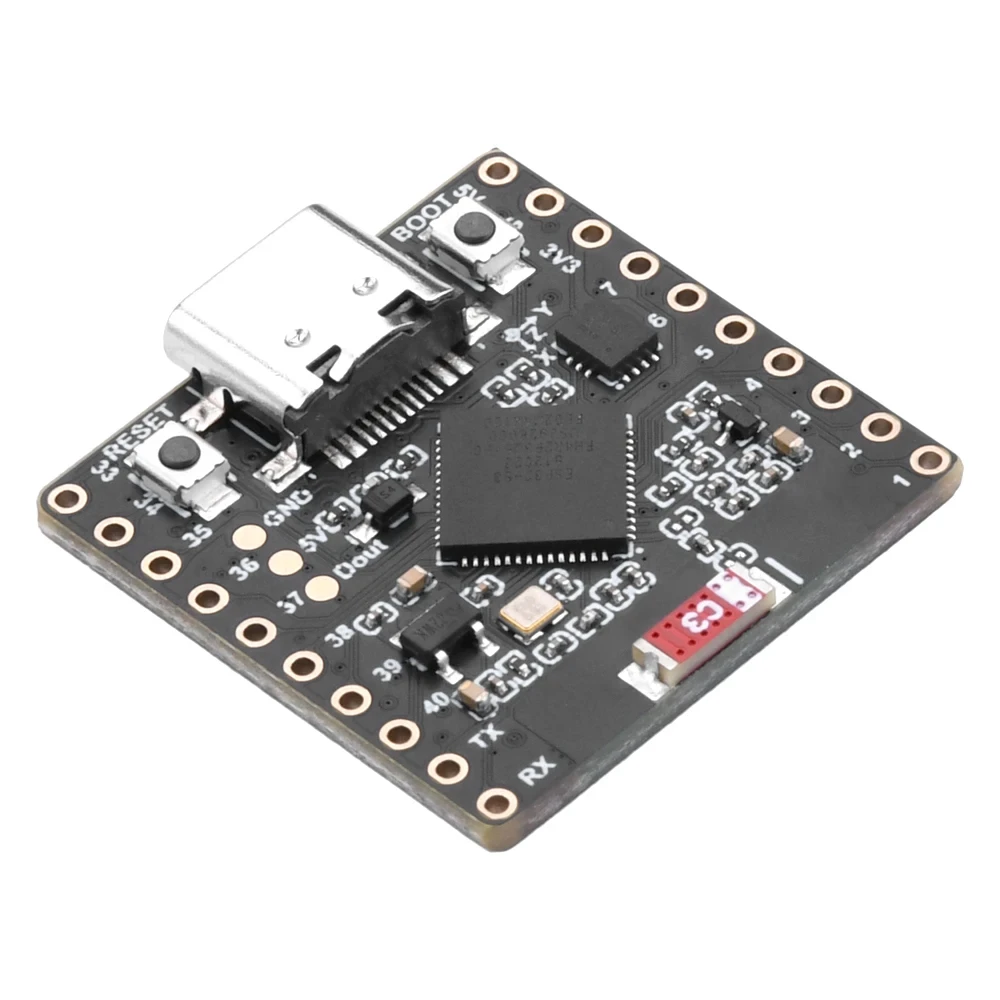
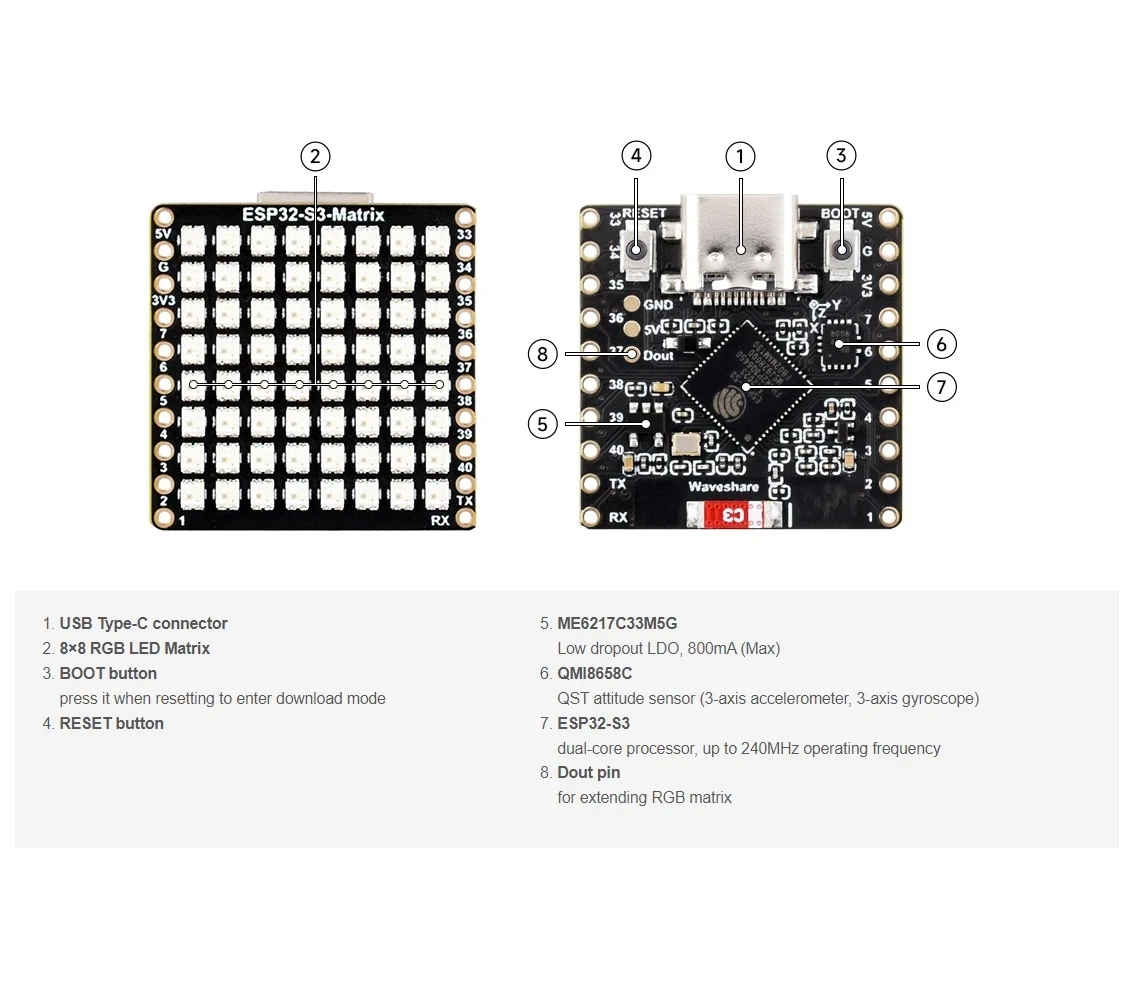
Cool project to create for fun and practical applications using ESP32-S3 RGB Matrix module. Links to other videos are below this article.
ESP32-S3 RGB LED Matrix Internet Clock Project - 2 Clock multi color Time & Date Display
ESP32-S3 RGB NeoMatrix Internet Clock with Time & Date Display
This project is an enhanced ESP32-S3 RGB Matrix Internet Clock that not only shows the current time but also periodically displays the date. The ESP32-S3 connects to Wi-Fi, synchronizes time from an NTP server, and scrolls either HH:MM or the date (for example SEP 21) across an 8×8 RGB NeoMatrix. The display supports automatic day/night brightness control and customizable RGB colors.
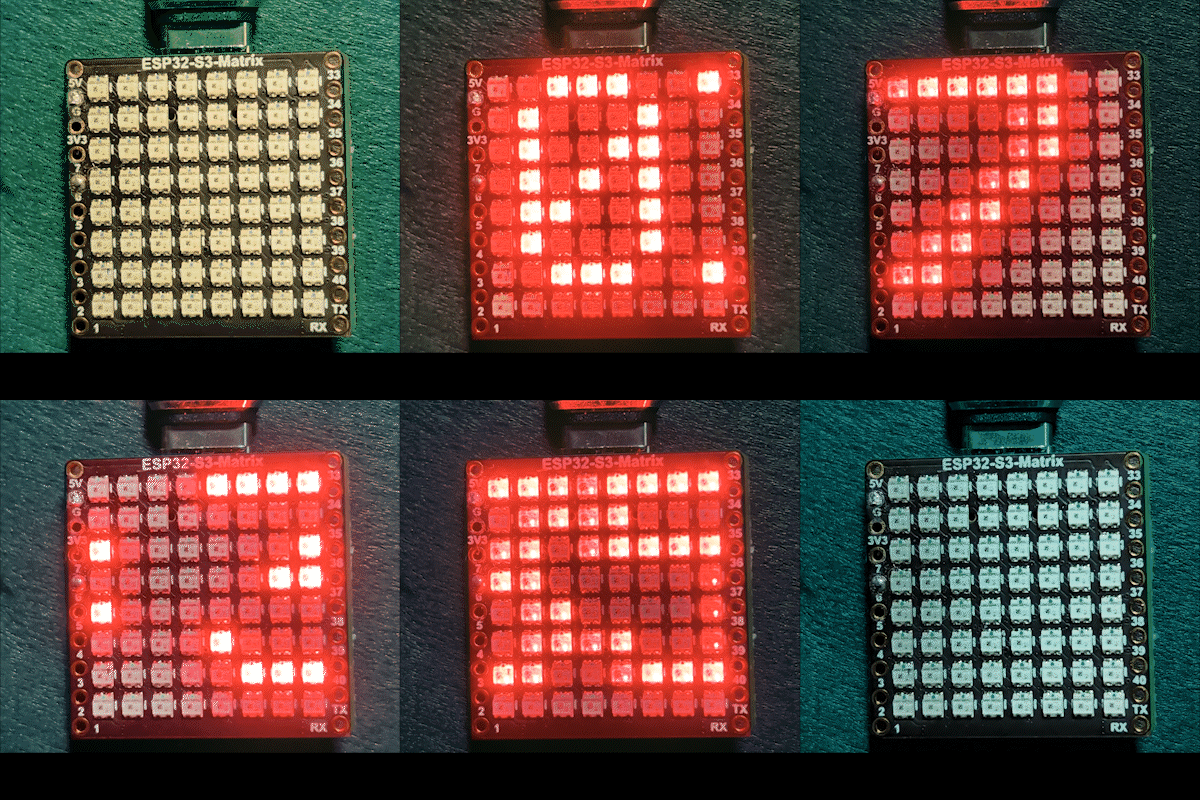

What this clock does
After connecting to your Wi-Fi network, the ESP32-S3 fetches the current local time from the internet. The clock normally scrolls the time, but at a fixed interval it switches to show the date. Text color can be fixed to one color or automatically cycle through multiple user-defined colors. Brightness is automatically reduced at night to make the display easier on the eyes.
Libraries used
This sketch depends on the following libraries:
#include <WiFi.h>
#include "time.h"
#include <Adafruit_GFX.h>
#include <Adafruit_NeoMatrix.h>
#include <Adafruit_NeoPixel.h>
Install Adafruit NeoMatrix from the Arduino Library Manager. All required dependencies such as Adafruit GFX Library and Adafruit NeoPixel will be installed automatically.
Important user configuration
Wi-Fi SSID and password (case-sensitive)
You must replace the Wi-Fi credentials with your own network information:

const char* WIFI_SSID     = "WiFi";
const char* WIFI_PASSWORD = "passW0rd";
Important: Wi-Fi SSIDs are case-sensitive. For example, an SSID named "Book" is not the same as "book". If the capitalization does not match exactly, the ESP32 will fail to connect.
NTP server, time zone, and daylight saving
The clock uses an internet time server:
const char* ntpServer = "pool.ntp.org";Local time is calculated using these offsets:
const long  gmtOffset_sec     = -5 * 3600;
const int daylightOffset_sec = 3600;gmtOffset_sec: Your UTC offset in seconds (example: UTC-5 =-5 * 3600)daylightOffset_sec: Use3600for DST or0if DST is not used
These settings are applied using:
configTime(gmtOffset_sec, daylightOffset_sec, ntpServer);Brightness control (day / night)
This project automatically adjusts brightness based on the hour of the day:
const int DAY_BRIGHTNESS = 40;
const int NIGHT_BRIGHTNESS = 5;
const int NIGHT_START_HOUR = 22;
const int NIGHT_END_HOUR = 6;
Between 10 PM and 6 AM, brightness is reduced to make the display less distracting in dark environments. You can adjust these values to suit your preference.
RGB color configuration
The clock supports both fixed color mode and automatic color cycling. User-defined RGB colors are stored in an array:
uint8_t userColors[][3] = {
  {17, 43, 171},  // Light Blue
  {255, 0, 0},    // Red
  {0, 255, 0},    // Green
  {255, 165, 0},  // Orange
  {255, 0, 255}   // Magenta
};
Each color uses RGB (Red, Green, Blue) values ranging from 0 to 255. By changing these numbers, you can create virtually any color for the display. If useFixedColor is set to true, the clock always uses one color. If set to false, the color automatically changes after each full scroll.
To quickly find accurate RGB values for any color you want, use the RGB Color Picker tool Color Picker .
Time and date formatting
The time is formatted as HH:MM and stored in a small character buffer. The date is formatted as an uppercase string such as SEP 21. The display automatically switches between time and date at a fixed interval.
Scrolling logic on an 8×8 display
Because an 8×8 matrix is too small to show the full text at once, the sketch scrolls the text horizontally. Once the text fully leaves the display, the color is updated and the content switches between time and date when needed.
Demonstration
After uploading the sketch:
- The ESP32 connects to Wi-Fi
- Time is synchronized from the internet
- The current time scrolls across the matrix
- The date appears periodically
- Brightness automatically adjusts for day and night
Downloads and links
The complete source code is provided below this article. Links to parts, tools, and datasheets are also available below this article.
Images
This tutorial is part of: ESP32-S3 RGB LED Matrix
- ESP32-S3 RGB LED Matrix Project 1- Basic Dot
- ESP32-S3 RGB LED Matrix Project 2 - Scrolling Text
- ESP32-S3 RGB LED Matrix Project 3 - Text from mobile phone
- ESP32-S3 RGB LED Matrix Project 4 - Tilt dot
- ESP32-S3 RGB LED Matrix Project 5 - Arrow always up
- ESP32-S3 RGB LED Matrix Project 6 - Cible game
- ESP32-S3 RGB LED Matrix Wi-Fi + NTP Time Clock Project -1 Basic Clock
- ESP32-S3 RGB LED Matrix Internet Clock Project - 3 Night Color with Date
- ESP32-S3 RGB LED Matrix Internet Clock Project - 5 Rainbow color
- ESP32-S3 RGB LED Matrix Internet Clock Project - 4 Random color
- ESP32-S3 RGB LED Matrix test for RGB, GRB setting
/*
 * =====================================================================================
 * ESP32-S3 INTERNET RGB CLOCK (8x8 Matrix) - Project 2
 Multi color
 * =====================================================================================
 watch video https://youtube.com/shorts/4iWjLiD7fS8
 📚⬇️ Download and resource page https://robojax.com/RJT839
 * Author:  Ahmad Shamshiri (Robojax.com)
 * Date: 07 Jan 2026
 * * FEATURES:
 * 1. WiFi/NTP Time: Syncs automatically with internet time servers.
 * 2. Cycle-Based Color: Color changes ONLY when text finishes a full scroll.
 * 3. Auto-Brightness: Dims the LEDs during night hours (User-configurable).
 * 4. Periodic Date: Scrolls the date (e.g., "JAN 07") every 2 minutes.
 * * USER CONFIGURATION GUIDE:
 * -------------------------
 * - WiFi: Change 'WIFI_SSID' and 'WIFI_PASSWORD' to your local network.
 * - Colors: Add or remove {R, G, B} sets in the 'userColors' array.
 * - Night Mode: Adjust 'NIGHT_START_HOUR' and 'NIGHT_BRIGHTNESS'.
 * =====================================================================================
 */

#include <WiFi.h>
#include "time.h"
#include <Adafruit_GFX.h>
#include <Adafruit_NeoMatrix.h>
#include <Adafruit_NeoPixel.h>

#define MATRIX_PIN 14

// --- BRIGHTNESS CONFIGURATION ---
const int DAY_BRIGHTNESS = 40;
const int NIGHT_BRIGHTNESS = 5;
const int NIGHT_START_HOUR = 22;
const int NIGHT_END_HOUR = 6;

// --- COLOR CONFIGURATION ---
bool useFixedColor = false;
int fixedColorIndex = 0;
uint8_t userColors[][3] = {
  {17, 43, 171},  // Light Blue
  {255, 0, 0},    // Red
  {0, 255, 0},    // Green
  {255, 165, 0},  // Orange
  {255, 0, 255}   // Magenta
};

// 👇 REPLACE these with your real home WiFi name & password
const char* WIFI_SSID     = "WiFi";
const char* WIFI_PASSWORD = "passW0rd";


int currentColorIndex = 0;
int totalColors = sizeof(userColors) / sizeof(userColors[0]);

// --- DATE/TIME INTERVALS ---
unsigned long lastDateShowMs = 0;
const uint32_t dateIntervalMs = 30000; // 2 minutes
unsigned long lastTimeUpdateMs = 0;
const uint16_t timeUpdateIntervalMs = 1000;
unsigned long lastScrollMs = 0;
const uint16_t scrollIntervalMs = 100;

// --- GLOBAL VARIABLES ---
Adafruit_NeoMatrix matrix(8, 8, MATRIX_PIN,
  NEO_MATRIX_TOP    + NEO_MATRIX_LEFT +
  NEO_MATRIX_ROWS   + NEO_MATRIX_PROGRESSIVE,
  NEO_RGB           + NEO_KHZ800);

char timeText[6] = "00:00";
char dateText[10] = "";
char currentDisplayText[12] = "";
int16_t scrollX = 8;


const char* ntpServer = "pool.ntp.org";
const long  gmtOffset_sec     = -5 * 3600;
const int   daylightOffset_sec = 3600;

void updateTimeAndDate() {
  struct tm timeinfo;
  if (!getLocalTime(&timeinfo)) return;

  snprintf(timeText, sizeof(timeText), "%02d:%02d", timeinfo.tm_hour, timeinfo.tm_min);
  strftime(dateText, sizeof(dateText), "%b %d", &timeinfo);
  for (int i = 0; dateText[i]; i++) dateText[i] = toupper(dateText[i]);

  if (timeinfo.tm_hour >= NIGHT_START_HOUR || timeinfo.tm_hour < NIGHT_END_HOUR) {
    matrix.setBrightness(NIGHT_BRIGHTNESS);
  } else {
    matrix.setBrightness(DAY_BRIGHTNESS);
  }
}

void scrollDisplay() {
  matrix.fillScreen(0);

  // FIXED LOGIC: Uses currentColorIndex which only changes at the end of a scroll
  int idx = useFixedColor ? fixedColorIndex : currentColorIndex;
  matrix.setTextColor(matrix.Color(userColors[idx][0], userColors[idx][1], userColors[idx][2]));

  matrix.setCursor(scrollX, 0);
  matrix.print(currentDisplayText);
  matrix.show();

  scrollX--;

  int16_t textWidth = strlen(currentDisplayText) * 6;

  // THE TRIGGER POINT: This happens only when text is fully off-screen
  if (scrollX < -textWidth) {
    scrollX = matrix.width();

    // 1. Cycle the color now and only now
    if (!useFixedColor) {
      currentColorIndex = (currentColorIndex + 1) % totalColors;
    }

    // 2. Decide whether to switch between Time and Date
    if (millis() - lastDateShowMs > dateIntervalMs) {
      strcpy(currentDisplayText, dateText);
      lastDateShowMs = millis();
    } else {
      strcpy(currentDisplayText, timeText);
    }
  }
}

void setup() {
  Serial.begin(115200);
  WiFi.begin(WIFI_SSID, WIFI_PASSWORD);
  while (WiFi.status() != WL_CONNECTED) {
    delay(500);
    Serial.print(".");
  }

  configTime(gmtOffset_sec, daylightOffset_sec, ntpServer);
  matrix.begin();
  matrix.setTextWrap(false);
  matrix.setBrightness(DAY_BRIGHTNESS);

  updateTimeAndDate();
  strcpy(currentDisplayText, timeText);
}

void loop() {
  unsigned long now = millis();

  if (now - lastTimeUpdateMs >= timeUpdateIntervalMs) {
    lastTimeUpdateMs = now;
    updateTimeAndDate();
  }

  if (now - lastScrollMs >= scrollIntervalMs) {
    lastScrollMs = now;
    scrollDisplay();
  }
}
Things you might need
-
Amazon
-
eBay
-
AliExpressPurchase ESP32-S3 RGB Matrix from AliExpresss.click.aliexpress.com
-
AliExpressPurchase ESP32-S3 RGB Matrix from AliExpress (2)s.click.aliexpress.com
Resources & references
-
Video
Files📁
Fritzing File
-
esp32-S3-supermini-tht fritzing part
esp32-S3-supermini-tht.fzpz0.02 MB