ArduinoでDHT22の温度と湿度を7セグメントディスプレイに表示 — RJT43
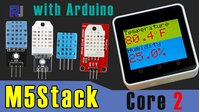
このプロジェクトは、Arduinoを使って7セグメントディスプレイに温度と湿度の読み取り値を表示する、シンプルでありながら効果的なシステムの構築方法を示します。この構成は環境条件の監視が重要なさまざまな用途に役立ちます。プロジェクトではDHT22温度・湿度センサーとTM1637 7セグメントディスプレイを組み合わせ、明確で読みやすい出力を提供します。


プロジェクトのアイデア:
- 快適性を最適化するための家庭環境の監視
- 温室やテラリウムの環境条件を追跡する。
- 基本的な気象観測所を作る。
- データロギングプロジェクトで温度と湿度を表示する。
ハードウェア/コンポーネント
このプロジェクトをビルドするには、以下のコンポーネントが必要です:
- Arduino Uno(または互換ボード)
- DHT22 温湿度センサー
- TM1637 7セグメントディスプレイ
- 接続配線
- ブレッドボード(必須ではないが推奨)
配線ガイド


配線は単純です。視覚的なガイドは動画(01:51)を参照してください。主な接続は次のとおりです:
- TM1637ディスプレイ:VCCを5Vに、GNDをGNDに、CLKをArduinoのピン2に、DIOをArduinoのピン3に接続します(動画の02:00で)。
- DHT22センサー:VCCを5Vに、GNDをGNDに、DATAをArduinoのピン9に接続(動画の02:20)。なお、動画ではセンサーに5Vを供給するためにArduinoのピン8を使用しています(動画の02:41)。
%%配線%%
コードの説明
このArduinoコードは2つのライブラリを使用しています:7セグメント表示用のTM1637DisplayとDHT22センサー用のDHTです。コードの設定可能なパラメータは主に冒頭にあります:
// Module connection pins (Digital Pins)
#define CLK 2
#define DIO 3
#define DHTPIN 9     // DHT22 data pin
#define DHTTYPE DHT22   // DHT sensor type
これらの行は、ディスプレイとDHT22センサーに接続されたArduinoのピンを定義します。異なるピンを使用する場合は、これらを調整する必要があるかもしれません。そのgetTemp()動画の07:03で紹介されている関数は重要です。文字列の引数を渡すことで、DHT22センサーから異なる値を取得できます:
float getTemp(String req) {
  // ... (Sensor reading code) ...
  if(req =="c"){ return t; } // Celsius
  else if(req =="f"){ return f; } // Fahrenheit
  // ... (Other options for Kelvin, humidity, heat index) ...
}
この関数はセンサーからの各種データ(摂氏、華氏、湿度、熱指数)の読み取りを簡素化します。メインループはこの関数を使ってデータを取得し、表示用に浮動小数点値を整数に丸めて7セグメントディスプレイに表示します(ビデオでは07:14)。
ライブプロジェクト/デモンストレーション
動画(00:32)ではプロジェクトの実演が行われています。7セグメントディスプレイは華氏で温度をはっきり表示しています。動画(08:21)では、コードを修正して摂氏、ケルビン、湿度、および熱指数の値を表示する方法も実演されています。
章
- [00:06] 導入とプロジェクトの概要
- [00:53] はじめにとコンポーネントの概要
- [01:51] TM1637ディスプレイの配線
- [02:20] DHT22センサーの配線
- [03:14] コードの説明: TM1637 のセットアップ
- [04:00] コードの説明: DHT22のセットアップ
- [05:54] コードの説明: メインループと表示関数
- [07:03] コードの解説: getTemp() 関数
- [08:21] デモンストレーションとさまざまな出力オプション
画像


/*
 * Original code from TM1637 https://github.com/avishorp/TM1637
 * Original code and library for DHT22 https://github.com/adafruit/DHT-sensor-library
 * Modified for Robojax video on January 7, 2018
 * by Ahmad Shamshiri, in Ajax, Ontario, Canada
 * Watch the video for this code https://youtu.be/z_FvRm6Te78
 * Other Arduino library and videos https://robojax.com
 * Get this code and other Arduino codes from Robojax.com
Learn Arduino step by step in a structured course with all material, wiring diagrams, and libraries
all in one place.

If you found this tutorial helpful, please support me so I can continue creating
content like this.

or make a donation using PayPal http://robojax.com/L/?id=64

 *  * This code is "AS IS" without warranty or liability. Free to be used as long as you keep this note intact.*
 * This code has been downloaded from Robojax.com
    This program is free software: you can redistribute it and/or modify
    it under the terms of the GNU General Public License as published by
    the Free Software Foundation, either version 3 of the License, or
    (at your option) any later version.

    This program is distributed in the hope that it will be useful,
    but WITHOUT ANY WARRANTY; without even the implied warranty of
    MERCHANTABILITY or FITNESS FOR A PARTICULAR PURPOSE.  See the
    GNU General Public License for more details.

    You should have received a copy of the GNU General Public License
    along with this program.  If not, see <https://www.gnu.org/licenses/>.
 */

// ****** Start of TM1637 Display code
#include <Arduino.h>
#include <TM1637Display.h>
// Module connection pins (Digital Pins)
#define CLK 2
#define DIO 3
// The amount of time (in milliseconds) between tests
#define TEST_DELAY   1000
TM1637Display display(CLK, DIO);
// ****** end of TM1637 Display code

// Example testing sketch for various DHT humidity/temperature sensors
// Written by ladyada, public domain


// ****** Start of DHT code
#include "DHT.h"
#define DHTPIN 9     // what digital pin we're connected to
// Uncomment whatever type you're using!
//#define DHTTYPE DHT11   // DHT 11
#define DHTTYPE DHT22   // DHT 22  (AM2302), AM2321
//#define DHTTYPE DHT21   // DHT 21 (AM2301)
DHT dht(DHTPIN, DHTTYPE);
// ********** end of DHT22 code

void setup()
{
  Serial.begin(9600);
  Serial.println("DHT22 Robojax Test with Display");
  pinMode(8,OUTPUT);
  digitalWrite(8,HIGH);// gives 5v for DHT22
  dht.begin();
}

void loop()
{
  delay(TEST_DELAY);// wait
  // **** TM1637 code start
  display.setBrightness(0x0f);// set brightness
  uint8_t data[] = { 0x0, 0x0, 0x0, 0x0 };// clear display values
  display.setSegments(data);//clear display
  // **** TM1637 code end


  // Robojax.com test video
  Serial.println(getTemp("h"));

  int temp = round(getTemp("h"));

  display.showNumberDec(temp, false, 3,1);


}// loop end


/*
 * getTemp(String req)
 * returns the temperature related parameters
 * req is string request
 * This code can display temperature in:
 * getTemp("c") is used to get Celsius
 * getTemp("f") is used to get Fahrenheit
 * getTemp("k") is used for Kelvin
 * getTemp("hif") is used to get Fahrenheit
 * getTemp("hic") is used to get Celsius
 * getTemp("h") is used to get humidity
 * written by Ahmad Shamshiri for Robojax.com on January 7, 2018
 * in Ajax, Ontario, Canada
 */
float getTemp(String req)
{

  // Reading temperature or humidity takes about 250 milliseconds!
  // Sensor readings may also be up to 2 seconds 'old' (it's a very slow sensor)
  float h = dht.readHumidity();
  // Read temperature as Celsius (the default)
  float t = dht.readTemperature();
  // Read temperature as Fahrenheit (isFahrenheit = true)
  float f = dht.readTemperature(true);

  // Compute heat index in Fahrenheit (the default)
  float hif = dht.computeHeatIndex(f, h);
  // Compute heat index in Celsius (isFahreheit = false)
  float hic = dht.computeHeatIndex(t, h, false);

  // Check if any reads failed and exit early (to try again).
  if (isnan(h) || isnan(t) || isnan(f)) {
    Serial.println("Failed to read from DHT sensor!");
    return 0.0; //return 0.0 instead of nothing.
  }
  // Compute heat index in Kelvin
  float k = t + 273.15;
  if(req =="c"){
    return t;//return Celsius
  }else if(req =="f"){
    return f;// return Fahrenheit
  }else if(req =="h"){
    return h;// return humidity
  }else if(req =="hif"){
    return hif;// return heat index in Fahrenheit
  }else if(req =="hic"){
    return hic;// return heat index in Celsius
  }else if(req =="k"){
    return k;// return temperature in Kelvin
  }else{
    return 0.000;// if no request found, return 0.000
  }

}
リソースと参考文献
まだリソースはありません。
ファイル📁
Arduinoライブラリ(zip)
-
DHT22 PCBモジュール 赤
DHT22-module-red.fzpz0.01 MB
フリッツィングファイル
-
DHT22湿度温度センサー
DHT22 Humidity and Temperature Sensor.fzpz0.01 MB -
DHT22 PCBモジュール 赤
DHT22-module-red.fzpz0.01 MB -
DHT22モジュール ホワイト
DHT22-module-white.fzpz0.01 MB -
TM1637 セブンセグメントモジュール
TM1637.fzpz0.01 MB -
DHT11湿度および温度センサー(3ピン)
DHT11 Humitidy and Temperature Sensor (3 pins).fzpz0.20 MB
ユーザーマニュアル
-
DHT22 温度・湿度センサー ユーザーマニュアル
robojax-DHT22_manual.pdf0.36 MB