本教程是的一部分: 第 107 课 28BYJ-48 步进电机 8 个项目
本视频包含 8 个项目,每个项目都有独立的代码。其他视频的链接位于本文下方。

Lesson 107-4: Controlling a 28BYJ-48 Stepper Motor Using Two Push Buttons, CW, CCW (Keep Pressed), STPB-2
Project 4: Push Button Hold-to-Run Using STPB-2 – 28BYJ-48 Stepper Motor
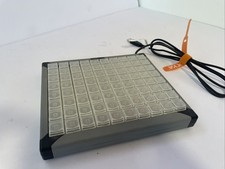
This article covers the fourth project in the series of 8 tutorials on controlling the 28BYJ-48 stepper motor with Arduino. In this project, the stepper motor is controlled using a push button labeled STPB-2. Unlike the previous project where a single press triggered one full revolution, this setup allows the motor to rotate only while the button is held down.
All source code and wiring diagrams for this project are available below the article.
📘 Introduction
This project demonstrates a continuous motor control mechanism using a momentary push button. When the user holds the button down, the motor continuously steps forward. As soon as the button is released, the motor stops. This method is common in jog controls for industrial machines and testing rigs.
âš™ï¸ Wiring Diagram
The wiring for the stepper motor and ULN2003 remains the same. The button is connected as follows:
One terminal of push button STPB-2 → Arduino pin 2
Other terminal → GND
Internal pull-up resistor is enabled via code
Caption: Project 4 wiring: control motor with continuous motion while STPB-2 is pressed.
💻 Code Explanation
This code setup checks the state of the button continuously and moves the motor one step at a time while the button remains pressed.
Initialize Library and Pins:
#include <Stepper.h>
const int stepsPerRevolution = 2048;
Stepper myStepper(stepsPerRevolution, 8, 10, 9, 11);
const int buttonPin = 2;
Setup Function:
void setup() {
  myStepper.setSpeed(10);
  pinMode(buttonPin, INPUT_PULLUP);
  Serial.begin(9600);
}
Loop Function with Continuous Motion:
void loop() {
  if (digitalRead(buttonPin) == LOW) {
    myStepper.step(1); // One step at a time
  }
}
The motor moves one step each loop cycle while the button is held.
Releasing the button immediately stops the motion.
This gives fine-tuned manual control for step-by-step or smooth continuous motion.
🎬 Timestamps from Full Video
Refer to the following sections of the video for this project:
41:07 – Project 4: Introduction
42:29 – Project 4: Wiring
45:31 – Project 4: Code
49:38 – Project 4: Demonstration
📠Download Section
You’ll find complete code and wiring diagrams for this project below. This design is particularly useful for manual machine jogging or continuous feed applications.
Next up is [Project 5: One Revolution Triggered with STPB-3].
本教程是……的一部分: 第 107 课 28BYJ-48 步进电机 8 个项目
- Lesson 107-1: Start and Stop the 28BYJ-48 Stepper Motor with Direction Set in Code
- Lesson 107-2: Controlling a 28BYJ-48 Stepper Motor via Serial Monitor
- Lesson 107-3: Controlling a 28BYJ-48 Stepper Motor Using Three Push Buttons: CW, CCW, and Stop (STPB-1)
- Lesson 107-5: Send 28BYJ-48 Motor for One Revolution in CW or CCW Direction, STPB-3
- Lesson 107-6: Controlling a 28BYJ-48 Stepper Motor Using Three Push Buttons, with Angle and Speed STPB-4
- Lesson 107-7: Sending a 28BYJ-48 Stepper Motor to Any Angle with Defined STPB-5 Push Buttons
- Lesson 107-8: Controlling the Speed of a 28BYJ-48 Stepper Motor Using a Potentiometer
/*
* Lesson 107-4: Controlling a stepper motor using 2 push buttons STPB-2.
STPB-2: We control a stepper motor using two push buttons. One push button rotates the motor clockwise (CW), and the other rotates it counter-clockwise (CCW). Keys must be kept pressed.

In this lesson, we learn how to use a mini stepper motor 28BYJ-48 for our project. I am presenting 8 projects so you can use it in almost any application. In the video, I have explained the code, shown the full wiring diagram, and shown how to connect the wires, push buttons, and breadboard.

  Project 1: Running motor
  Project 2: Controlling stepper motor from Serial Monitor
  Project 3: Controlling stepper motor using push button STPB-1
  Project 4: Controlling using push button STPB-2 keep pressing (this code)
  Project 5: One Revolution using push button STPB-3
  Project 6: Push button: Any Angle and speed STPB-4
  Project 7: Using multiple buttons for any angle: STPB-5 (angle, speed and direction)
  Project 8: Controlling stepper motor using potentiometer

  * Watch Video instruction for this code: https://youtu.be/TQ7R2bY-MWU
  *
  * This code is part of the Arduino Step by Step Course, which starts here:  https://youtu.be/-6qSrDUA5a8
  *
  * For the library for this code, visit http://robojax.com/
  *

If you found this tutorial helpful, please support me so I can continue creating
content like this. Make a donation using PayPal or a credit card: https://bit.ly/donate-robojax

* Written by Ahmad Shamshiri for Robojax Robojax.com
* on Feb 20, 2019 at 19:34 in Ajax, Ontario, Canada

  *  * This code is "AS IS" without warranty or liability. Free to be used as long as you keep this note intact.*
  * This code has been downloaded from Robojax.com
     This program is free software: you can redistribute it and/or modify
     it under the terms of the GNU General Public License as published by
     the Free Software Foundation, either version 3 of the License, or
     (at your option) any later version.

     This program is distributed in the hope that it will be useful,
     but WITHOUT ANY WARRANTY; without even the implied warranty of
     MERCHANTABILITY or FITNESS FOR A PARTICULAR PURPOSE.  See the
     GNU General Public License for more details.

     You should have received a copy of the GNU General Public License
     along with this program.  If not, see <https://www.gnu.org/licenses/>.

*/
int Pin1 = 10;//IN1 is connected to 10
int Pin2 = 11;//IN2 is connected to 11
int Pin3 = 12;//IN3 is connected to 12
int Pin4 = 13;//IN4 is connected to 13
int switchCW  =2;//define input pin for CW push button
int switchCCW =3;//define input pin for CCW push button


int pole1[] ={0,0,0,0, 0,1,1,1, 0};//pole1, 8 step values
int pole2[] ={0,0,0,1, 1,1,0,0, 0};//pole2, 8 step values
int pole3[] ={0,1,1,1, 0,0,0,0, 0};//pole3, 8 step values
int pole4[] ={1,1,0,0, 0,0,0,1, 0};//pole4, 8 step values


int poleStep = 0;
int  dirStatus = 3;// stores direction status 3= stop (do not change)

void setup()
{
 pinMode(Pin1, OUTPUT);//define pin for ULN2003 in1
 pinMode(Pin2, OUTPUT);//define pin for ULN2003 in2
 pinMode(Pin3, OUTPUT);//define pin for ULN2003 in3
 pinMode(Pin4, OUTPUT);//define pin for ULN2003 in4

 pinMode(switchCW,INPUT_PULLUP);
 pinMode(switchCCW,INPUT_PULLUP);

}
void loop()
{

  if(digitalRead(switchCCW) == LOW)
  {
    dirStatus =1;
  }else if(digitalRead(switchCW) == LOW)
  {
   dirStatus  = 2;
  }else
  {
    dirStatus =3;
  }
 if(dirStatus ==1){
   poleStep++;
    driveStepper(poleStep);
 }else if(dirStatus ==2){
   poleStep--;
    driveStepper(poleStep);
 }else{
  driveStepper(8);
 }
 if(poleStep>7){
   poleStep=0;
 }
 if(poleStep<0){
   poleStep=7;
 }
 delay(1);

}// loop


/*
 * @brief sends signal to the motor
 * @param "c" is an integer representing the pole of the motor
 * @return does not return anything
 *
 * www.Robojax.com code June 2019
 */
void driveStepper(int c)
{
     digitalWrite(Pin1, pole1[c]);
     digitalWrite(Pin2, pole2[c]);
     digitalWrite(Pin3, pole3[c]);
     digitalWrite(Pin4, pole4[c]);
}//driveStepper end here
|||您可能需要的东西
-
全球速卖通Purchase 5 pcs 28BYJ-48 stepper motors from AliExpresss.click.aliexpress.com
资源与参考
-
外部Purchase 5 pcs 28BYJ-48 stepper motors from AliExpresss.click.aliexpress.com
文件📁
没有可用的文件。